Bitcoin appears to be entering a stage where sellers are becoming less active. After hitting a low near $60,000 on February 5, the cryptocurrency has spent over two months in a consolidation phase, slowly climbing towards the $70,000 mark. This upward movement coincides with global uncertainties stemming from conflicts in the Middle East that have driven oil prices significantly above $100 per barrel.
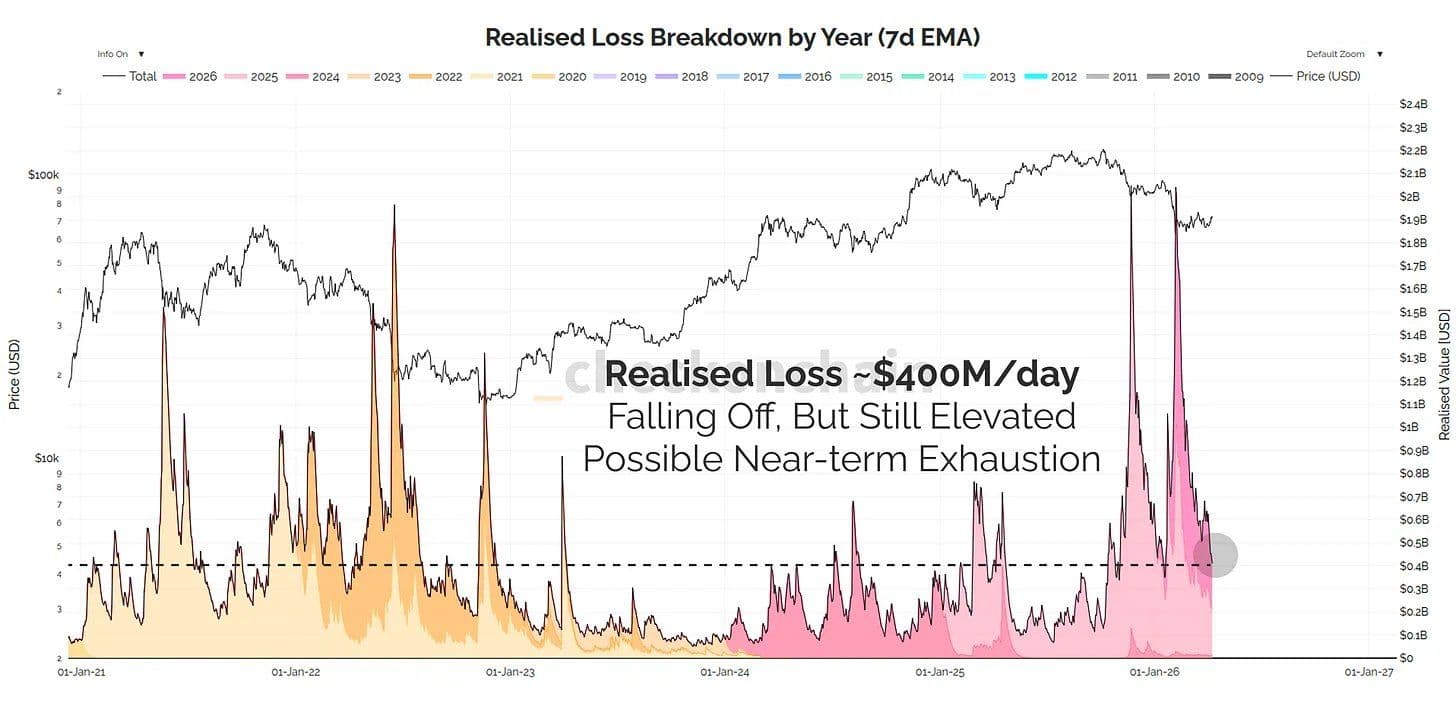
According to data from CheckonChain, there are signs that selling pressure is diminishing. Currently, realized losses hover around $400 million daily—still high compared to previous years but showing a downward trend in recent weeks.
Realized losses peaked at approximately $2 billion on November 21 and February 5, reaching levels not observed for several years and exceeding those during the bear market of 2022.
“The spot markets are transitioning from aggressive selling to net buying pressure; both realized profits and losses are decreasing,” noted CheckonChain.
Data from Glassnode supports this observation. The seven-day moving average indicates that realized profits stand at about $300 million per day—close to twelve-month lows. This implies that investors who bought Bitcoin at around $60,000 are now slightly profitable and starting to realize some gains.
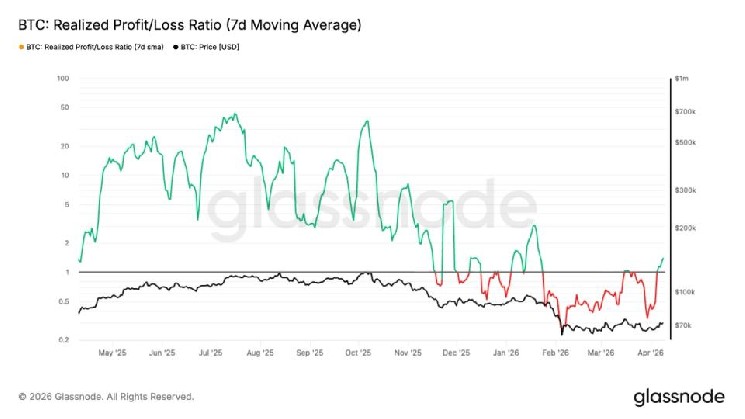
In addition, the ratio of realized profit-to-loss has climbed to 1.4—the highest since January—according to Glassnode’s findings. This metric compares coins moved at a profit against those moved at a loss and indicates that profits currently surpass losses.
Taken together, these indicators suggest an environment where selling pressure is subsiding, increasing the probability that Bitcoin is nearing a state of seller exhaustion.