The recent surge of Bitcoin to approximately $71,000 has rekindled discussions about its price dynamics, liquidity, and market positioning. However, it has also highlighted a less favorable reality within the network.
Surprisingly, the fee market remains largely stagnant.
In a landscape where on-chain congestion is often viewed as an indicator of genuine demand, this discrepancy warrants more scrutiny than yet another analysis of macroeconomic influences or ETF inflows.
According to CryptoSlate’s Bitcoin price tracker, $BTC was last recorded at $70,990 on April 9. This reflects a decrease of 0.86% over the past day but shows an increase of 6.11% over the week and 0.85% over the month.
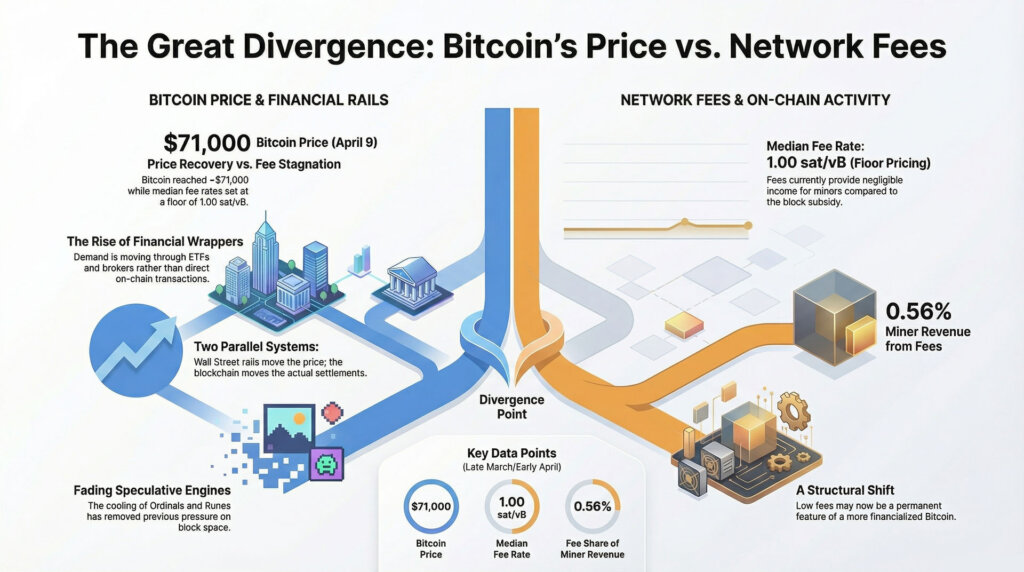
The price has clearly rebounded from its recent lows; however, the foundational layer appears calm and relatively inexpensive without significant competition for block space.
This disconnect indicates that increased demand for Bitcoin is being channeled through financial instruments like ETFs and brokerages rather than through users vying for on-chain transactions.
This pricing movement could still be sustainable under these conditions; however, it conveys a different message altogether.
A recent report analyzing Bitcoin block space from March 19 to March 26 revealed that median fee rates started at just 1.13 sat/vB and remained stable at around 1.00 sat/vB throughout that week—essentially establishing a floor price for fees.
This means users were able to secure confirmations without needing to pay higher prices for limited block space. The report examined a total of 1,028 blocks and noted only $18.03 in total fees—approximately just $0.0175 per block in fees collected by miners during this period.
The Price Has Rebounded While Fee Markets Remain Dormant
Such figures are surprisingly low given that Bitcoin trades near $71K again—a stark contrast from earlier cycles where rising prices typically coincided with busier blocks and heightened competition leading up to increased fee markets before most participants even realized it was happening.
This instinct still shapes how many crypto enthusiasts interpret current demand trends; however,the present market seems to convey an entirely different narrative.
A notable reason behind this subdued fee environment is that one speculative driver previously influencing transaction costs has diminished significantly: Ordinals along with other inscriptions had created noticeable spikes in non-monetary demands competing for inclusion while Runes briefly amplified similar effects ahead of next year’s halving event.
Now those pressures have notably receded—the blockchain no longer experiences frantic inscription-driven competition which suggests today’s low-fee climate isn’t merely indicative of healthy efficiency or tranquil user behavior but instead reflects missing elements previously inflating transaction volumes alongside exerting upward pressure upon associated costs too!
Understanding Demand Distribution Through Financial Products Versus On-Chain Activity
The above context clarifies why there can be simultaneous rebounds in $BTC, despite weak underlying fees across networks today compared against previous cycles when Ordinals & Runes provided miners additional revenue streams while prompting observers’ interpretations regarding mempool stress indicating expanding interest levels…
Currently though? That support looks considerably thinner now! Speculative traffic once congested chains have cooled down significantly leaving BTC increasingly reliant either organic settlement demands OR financial flows driven primarily by changing asset access channels (ETFs/broker products).
This shift also emphasizes what might already be absent altogether…Particularly due fact pipes carrying capital into digital assets changed dramatically allowing buyers using spot ETFs etc., push investments towards BTC exposure without creating same base-layer footprint seen traditionally through direct coin transfers across chain itself!
The Low Fees Indicate Where Demand Is Landing And What Miners Are Missing Out On
Final Thoughts:
- Where exactly does true demand manifest?
- Presently strongest indicators suggest it’s occurring primarily inside financial products rather than directly onto blockchain spaces themselves thus carrying significant implications regarding future understandings needed going forward..
- Current rebound witnessed gaining traction mostly through channels long sought after including funds/advisors/brokers/mainstream portfolio plumbing—notably lacking same urgency reflected accordingly priced access layers existing beneath surface level observations made concerning general trading activity levels ongoing presently..