Bitcoin ($BTC) has recently gained attention due to block 666666, which contains a hidden message encoded directly on the blockchain. This message, inserted via an OP_RETURN transaction, states: “Do not be overcome by evil, but overcome evil with good.” This instance exemplifies how Bitcoin’s ledger functions as both a financial system and an enduring record of information.
The Method of Storage
This particular block was mined on January 19, 2021, as confirmed by data accessed from the blockchain explorer Blockstream.info on April 6.
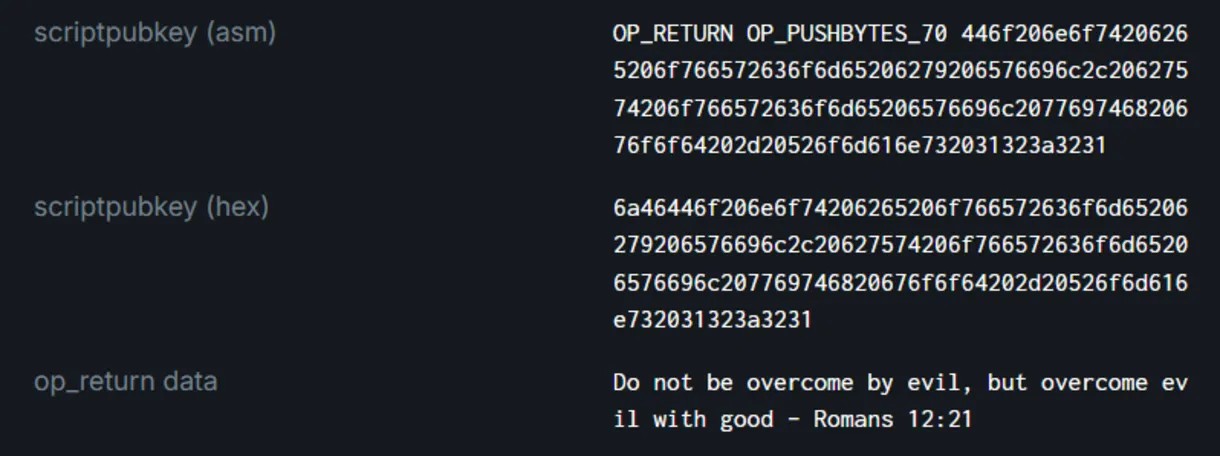
The inscription was created using OP_RETURN—a Bitcoin feature that permits small amounts of data to be included in transactions without affecting balances or transfers. This method allows for the recording of unalterable information onto the blockchain that can be verified at any time.
The text alludes to Romans 12:21 from the Bible and becomes permanently inscribed once it is part of a confirmed block. Additionally, ‘666’ holds special significance for Christians since it is referred to as the “number of the beast”, associated with Satan in biblical texts.
Apart from this notable message, two separate Bitcoin addresses were involved in this transaction; each contained hidden words within them. The first address starts with “God”, while the second begins with “Bible.”
1GoDxxMEvikCb7JLAuqGWNeht75E48AgN6
1BibLEafdYxCvioFhuemkbiY9r6TT5iNBn
This isn’t an isolated incident; Bitcoin has a rich history filled with similar inscriptions made possible through its capability to attach brief messages to transactions. From early political expressions to contemporary statements, users have utilized OP_RETURN for leaving lasting impressions within blocks.
The Significance Behind It
While block 666666 does not differ technically from other blocks in its function or structure, its unique number lends prominence to its embedded message. Beyond mere symbolism lies an important takeaway.
In addition to serving as a payment network, Bitcoin acts as a decentralized archive where once-confirmed data cannot be altered or erased—this duality continues attracting developers and users who seek permanence in their digital records.