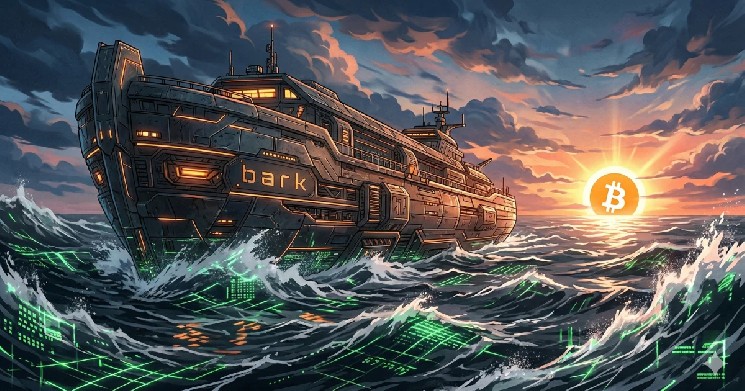
Recently, SecondHQ, a newly established Bitcoin development lab, has attracted attention by hiring another former Blockstream engineer known as “Grubles,” who brings over eight years of experience from the company. The flagship product of SecondHQ, named Bark, aims to introduce an innovative “Fast, low-fee, self-custodial” wallet.
Today marks my final day at Blockstream after more than eight years.
It has been an amazing opportunity to collaborate with such a talented team on both marketing and engineering fronts; my gratitude for this experience is beyond words.
As I move on, I am incredibly excited about what lies ahead…
— grubles (@notgrubles) March 3, 2026
In addition to Grubles, several other ex-Blockstream staff members have joined SecondHQ including Neil Woodfine (CMO), Steven Roose (CEO), and Erik De Smedt (CTO). The lab is currently dedicated to advancing user-friendly Bitcoin wallet technology. Within this sector of the industry emerges the Ark protocol—a layer two payments solution that offers different trade-offs compared to the Lightning Network in order to provide users with scalable self-custody and payment features at minimal costs. Bark represents SecondHQ’s tailored implementation of the Ark protocol and is designed for seamless interaction with the Lightning Network.
“The approach taken by Bark differs from payment channels used in Lightning; however, they complement each other quite well,” Grubles shared in an exclusive interview with Bitcoin Magazine. He added that “At SecondHQ we are committed to building an Ark focused solely on enhancing Bitcoin onboarding and payment experiences.” Their website highlights a bridge between Ark and Lightning that allows users to pay Lightning invoices directly from their Ark balance without needing channels or liquidity providers—everything is handled atomically.
Grubles mentioned that they have secured $5.1 million from private investors while employing a team of eleven individuals working on Bark. Comprehensive technical documentation regarding this project can be accessed at second.tech; they anticipate launching their mainnet “soon.”
Users interested in trying out Bark payments can do so via Signet. “I highly recommend giving it a shot since it represents such a transformative shift in how we handle onboarding and payments,” Grubles encouraged early adopters.
The Challenge of Scaling Self-Custody for Bitcoin
Bark’s most notable claim revolves around providing self-custody solutions at low costs. While scaling custodial Bitcoin payments may seem straightforward—as evidenced by applications like Wallet of Satoshi or Cash App—the challenge lies in delivering self-custody options for small transactions across millions globally.
The current capabilities allow Onchain Bitcoin transactions roughly seven times per second which limits scalability when numerous users attempt multiple daily transactions involving maximum self-custodial amounts each time. As noted by Knifefight’s insightful article titled “Free As In Freedom Is Not Free As In Beer” published on Bitcoin Magazine: “Bitcoin confirms approximately 400 thousand transactions daily—that translates into one transaction per person every fifty-five years if no births or deaths occur during waiting periods.” Furthermore onboarding new users using Onchain bitcoin can be cumbersome since wallets indicate pending confirmations until deposits are verified—which could take up thirty minutes as blocks are mined.
The creation of the Lightning Network aimed specifically at overcoming these obstacles while maintaining cypherpunk principles alongside decentralized attributes associated with Onchain self-custody solutions has seen some success but not without significant compromises involved too! Hosting one’s own sovereign lightning node remains easier than ever today yet still demands considerable technical know-how or specialized hardware designed explicitly for ease-of-use—all barriers too daunting for non-tech-savvy individuals merely seeking secure bill payment options.
A mobile wallet like Phoenix does bring lightning network-style custody directly into user hands but comes attached with caveats requiring trust under extreme scenarios along sacrificing substantial privacy levels due Acinq—the app developer needing pseudonymous access towards user balances just so processing becomes feasible! Additionally locking oneself within Phoenix acts as liquidity provider incurs often higher fees relative towards custodial alternatives available within lightning networks thus leading many back down paths previously trodden before discovering better alternatives exist elsewhere!
This app works effectively post-onboarding phase yet often results costing upwards $10 dollars worth SATS taking over half-an-hour which proves excessive when attempting sell bitcoin akin digital cash while simultaneously aiming onboard fresh faces right then-and-there!
A number companies have sought address these scaling/user-experience hurdles utilizing Blockstream’s Liquid Network—a consortium comprised international bitcoin corporations operating alternative blockchain compatible fast block times larger capacities overall enabling wallets like BullBitcoin Aqua onboard clients utilizing LBTC capable confirming transactions within minute offering built-in swap exchanges converting onto BTC & lightning networks seamlessly integrating broader market dynamics surrounding cryptocurrencies alike!
Bark believes it holds potential surpassing existing methods addressing recovery paths typical among traditional bitcoins combined instant velocity facilitated through lightning networks delivered immediately upon downloading apps eliminating cumbersome roadblocks associated liquid side chains channel management altogether!
</