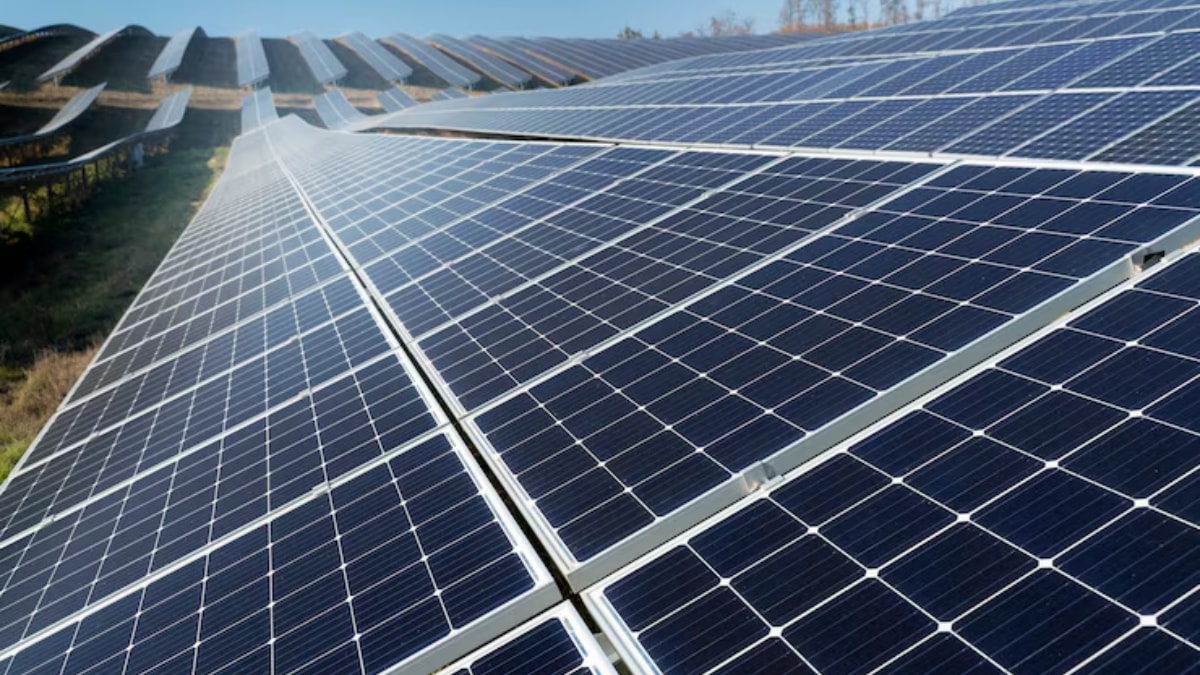
A sizeable section of 43 gigawatt (GW) renewable energy capacity that has gone begging for want of buyers at the “high prices” discovered under competitive tenders floated in recent years may get operational in the first half of the current fiscal year. According to a senior official from the Ministry of New and Renewable Energy (MNRE), the government and intermediary agencies are looking to execute power sale agreements (PSA) with distribution entities (discoms) for at least 10-12 GW of the stranded capacity over the next few weeks.
To encourage the buyers, the government and the Solar Energy Corporation of India (SECI) may rework the pricing and contractual terms, without jeopardising the projects’ commercial viability for the developers. The move will also be in line with the MNRE’s strategy to ensure efficient absription of RE through grid integration, storage deployment and market reforms.
ALSO READCrude oil, gas derivative prices to remain high till supply chains normalise, says Ind-Ra
As of September 30, 2025, RE implementing agencies had issued Letters of Award (LoAs) for 43,942 mega watt of capacity where PSAs with end procurers (discoms) remained unsigned. Each megawatt entails investments of Rs 4-5 crore; capital investments in the stranded capacities have been to the tune of over Rs 2 lakh crore.
Rs 2 Lakh Crore in Stalled Capital
The MNRE move is aimed at clearing a backlog of projects that have already secured LoAs but are yet to tie up buyers, a key hurdle slowing execution despite record capacity additions.
“About 42 GW of renewable energy projects have unsigned PSAs… we are hopeful that 10–12 GW of such agreements will be signed in the next three to four months,” the official said, signalling a push to accelerate deal closures.
Sources, however, indicated around 6–8 GW of the stalled capacity is seen as unviable and might face cancellations. This was largely due to the nature of projects and higher tarrifs, making them less competitive in the current market. While plans for signing PSAs for 10-12 GW are afoot, revival of the remaining 20–22 GW is also under active consideration, with discussions underway between developers and procurers to resolve pricing and contractual issues.
ALSO READDiesel up 54%, explosives 44%: Cost surge hits coal mining
RE projects are designed as follows: a developer wins a tender to sell power at a certain price, and then signs a power purchase agreement with an intermediary agency like the SECI) to sell the electricity at the discovered tariff. A matching sales contract (PSA) is subsequently signed between the internediary and the end consumers (discoms or industrial users). The PSA transfers the power and all attendant the obligations from the developer to the end buyer.
Currently, PSAs/PPAs are in place for around 230 GW out of 275 GW of installed renewable energy capacity, indicating that while most capacity is tied up, a sizeable portion remains stranded without offtake.
Rise of Distributed Solar
The push to expedite agreements comes as India scales up renewable deployment to meet its 500 GW non-fossil fuel capacity target by 2030, with current addition trends indicating steady progress.
India added 44 GW of solar capacity in FY2025-26, taking cumulative installed solar capacity to 150 GW, while total non-fossil capacity addition stood at 55.59 GW during the year.
The energy mix is also shifting steadily. The share of non-fossil sources in total power generation rose to 29% in FY26 from 25% in FY25, while fossil-based generation declined to 70.8% from 74.5%.
Solar is also expanding into new demand segments. “Solar energy is now powering trains during solar hours as direct PSAs have been signed with Indian Railways for electrification of trains,” Joshi said. Industry projections indicate continued growth momentum. According to BloombergNEF, India’s solar capacity additions are expected to rise 6% year-on-year in 2026 to over 50 GW, even as global installations slow.
India is also projected to overtake the US as the world’s second-largest solar market in 2026, supported by sustained deployment growth.
A key driver of this expansion is distributed renewable energy (DRE), which is scaling rapidly across agriculture and households. India added 16.3 GW of DRE capacity in FY26, accounting for 36% of total solar additions, with 6.6 GW added in March alone.
DRE initiatives under PM Kusum and PM Surya Ghar are expected to ease fiscal pressures on states. “These initiatives are likely to reduce states’ ₹2.4 lakh crore electricity subsidy burden over time,” MNRE Secretary Santosh Sarangi said.
MNRE minister Pralhad Joshi recently highlighted early gains from the scheme. “PM Kusum has covered almost the entire farming community’s irrigation needs in Maharashtra… subsidy given to farmers has been reduced,” he said.
TOPICSRenewable EnergyThis article was first uploaded on April ten, twenty twenty-six, at forty-one minutes past seven in the evening.