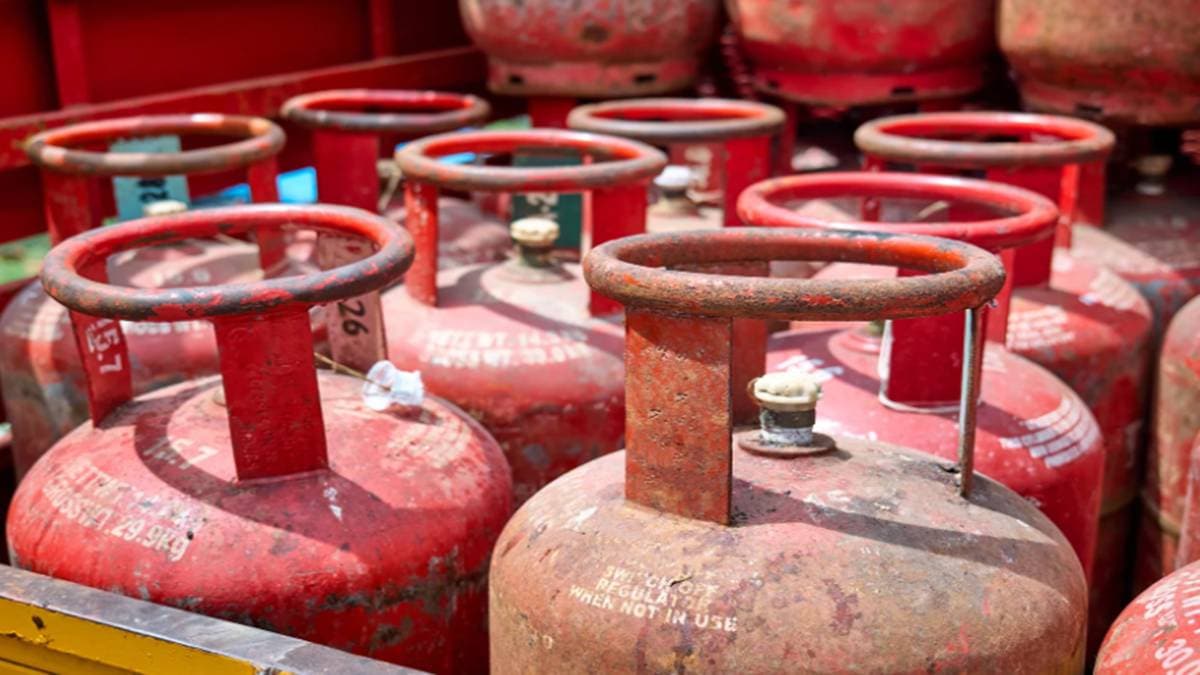
India’s LPG crisis deepened on April 1 as commercial cooking gas prices were hiked by ₹195.50 per 19-kg cylinder, even as state-run oil marketing companies (OMCs) stare at cumulative losses of ₹40,484 crore by end-May due to mounting under-recoveries triggered by the West Asia conflict.
The sharp increase, which takes the price of a 19-kg commercial cylinder to ₹2,078.50 in Delhi, comes on the back of a steep surge in global LPG prices, with the Saudi Contract Price — the benchmark for India — jumping 44% month-on-month to $780 per metric tonne in April from $542 per tonne in March.
“April 1 price increase in Commercial cylinder price is due to a 44% surge in the Saudi Contract Price: from $542/MT in March to $780/MT for April, as 20-30% of global LPG supplies are stuck in Strait of Hormuz,” the petroleum ministry said.
ALSO READUS lists trade issues to address with India
Global Supply Choke
The disruption in the Strait of Hormuz, a key global energy transit route, has choked nearly one-third of global LPG supplies, tightening availability and pushing up prices worldwide. India, which imports 60–65% of its LPG needs and sources nearly 90% of those imports from West Asia, is among the most exposed to the crisis.
The immediate impact is visible across cities. Commercial cylinder prices have risen to ₹2,208 in Kolkata, ₹2,031 in Mumbai and ₹2,246 in Chennai, marking the second increase in a month and raising concerns over inflationary pressures on food, hospitality and small businesses.
While commercial users face higher costs, the government has chosen to shield domestic consumers by keeping household LPG prices unchanged at ₹913 per 14.2-kg cylinder, with Ujjwala beneficiaries continuing to receive cylinders at ₹613.
However, this protection is coming at a steep fiscal cost.
Fiscal Strain
“At current prices, OMCs are incurring under recovery of Rs 380/cylinder. Cumulative losses by end-May will reach approximately Rs 40,484 crore,” the ministry said, underlining the financial stress on public sector fuel retailers.
The burden is being shared between oil companies and the government. “Last year also, out of total losses of Rs 60,000 crore, Rs 30,000 crore were absorbed by Oil PSUs and Rs 30,000 crore by Government of India, in order to insulate the Indian citizen from high international LPG prices,” the ministry added.
ALSO READRoW, clearance hurdles slow grid expansion amid rising power demand
The crisis has also triggered supply-side adjustments. With LPG availability tightening, the government has prioritised supplies to domestic households and curtailed allocations to commercial users earlier, though these are now being gradually increased to ease pressure on businesses.
Commercial LPG, though accounting for less than 10% of total consumption, is critical for urban economic activity. “Prices of Commercial LPG cylinders, used by industries and hotels, are deregulated, market determined and revised normally on a monthly basis. Their consumption is less than 10% of the total LPG consumed in the country,” the ministry said.
The broader energy landscape is also under strain. Global petroleum prices have risen by up to 100% in the last month, leading to under-recoveries of ₹24.40 per litre on petrol and ₹104.99 per litre on diesel at current retail prices, even as pump prices remain unchanged.
“Regular petrol and diesel prices — the fuel that India runs on — are unchanged… With global petroleum prices up by up to 100% in the last 1 month, PSU OMCs are incurring under-recoveries of Rs 24.40/litre on petrol and Rs 104.99/litre on diesel,” the ministry said.
To manage the supply shock, India has ramped up domestic LPG production by 40% to 50,000 metric tonne per day against a requirement of 80,000 tonne, while securing 800,000 tonne of LPG cargoes from the US, Russia, Australia and other countries.
At the same time, the government is pushing consumers and industries towards alternatives such as piped natural gas (PNG), where supply conditions are relatively stable.
Adding to the pricing developments, premium auto fuels have also seen revisions. Prices of high-octane petrol and premium diesel variants sold by Indian Oil Corporation have been increased in Delhi. The cost of XP100 petrol has been raised from ₹149 per litre to ₹160 per litre, while Xtra Green premium diesel now costs ₹92.99 per litre compared with ₹91.49 earlier.
The ministry clarified that these fuels cater to a niche segment. “The recent Rs 2/litre revision applies only to premium petrol variants – XP95, Power95, Speed – high-octane performance products, whose prices are revised on fortnightly basis and whose sales by volume are 2% and 5% of total volume. They are purchased by motorists, at a premium, by choice.”
TOPICSLPG cylindersThis article was first uploaded on April one, twenty twenty-six, at twelve minutes past seven in the evening.