Financial markets are already showing signs of response to the escalating geopolitical tensions. Insiders from Polymarket, who accurately predicted the onset of conflict in Iran, are now placing significant bets on the likelihood of US military involvement on Iranian soil.
This has led investors to ponder a more pointed question: how would financial markets react if the situation in Iran escalates into a scenario reminiscent of Iraq in 2003? While history provides some context, it does not yield straightforward answers.
A Polymarket account that has correctly predicted 9 US attacks is betting on “US forces entering Iran” by March 31. https://t.co/sHIslhMIMy
— Zachary Foster (@_ZachFoster) March 5, 2026
Market Reactions During the Iraq War in 2003
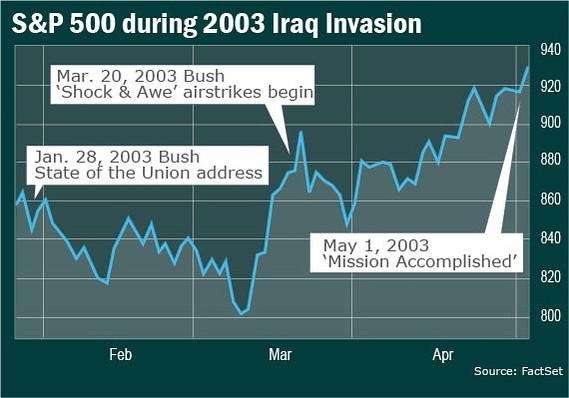
Analysis surrounding the invasion of Iraq in 2003 indicates that US equities had already absorbed considerable anxiety prior to the war’s official commencement.
This implies that markets were reflecting a distinct “war discount,” as investors harbored concerns about potential escalation and its ramifications.
Once hostilities commenced and initial worst-case scenarios failed to materialize immediately, this discount began to dissipate.
Throughout this period under review, the S&P 500 experienced an increase ranging from approximately 3.8% to 4%, while oil prices saw a decline between $6.5 and $7. This suggests that market movements were less about war itself and more about diminishing uncertainty.
The same research revealed that a crucial Treasury-based risk-free rate proxy dropped by around forty basis points as perceptions regarding war shifted.
This decline benefitted stocks since lower interest rates typically bolster valuations while simultaneously indicating investor preference for safety during turbulent times.
Sector performance also exhibited predictable trends; energy and defense sectors often see initial gains during wartime due to expectations for increased oil profits and military expenditure.
Conversely, sectors such as finance and technology tend to be more influenced by changes in yields and growth forecasts.
Divergent Market Responses During Russia-Ukraine Conflict in 2022
The market dynamics observed during Russia’s incursion into Ukraine differed significantly from those seen previously. On February day when Russian troops crossed into Ukraine, there was notable volatility within US stock indices which ultimately closed higher than they opened.
The S & P ;500 ended with an approximate gain of 1 .5 % , while the Nasdaq rose around 3 .3 % , illustrating how swiftly markets can rebound when sentiment shifts away from excessive pessimism.
Concurrently , yields on ten-year U.S.Treasuries decreased roughly three basis points down towards 1 .97 % , indicating investors sought refuge within bonds amid growing apprehensions regarding economic growth prospects.
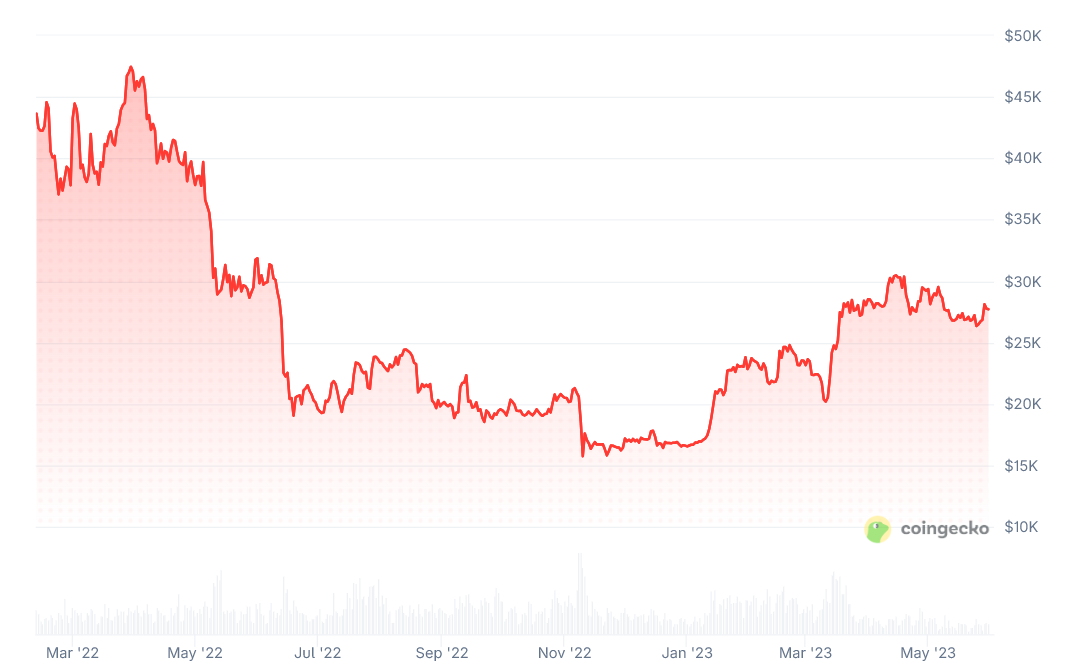
Bitcoin displayed markedly different behavior during this period ; it plummeted sharply at first amidst headlines concerning invasion news before hitting one-month lows with losses nearing seven percent .
This reaction is significant because it highlighted Bitcoin’s tendency towards high-risk asset behavior rather than functioning as a safe haven amidst peak uncertainty.
Data regarding cryptocurrency fund flows throughout this timeframe also illustrated pronounced volatility driven largely by wartime developments across digital asset products .
The Implications for Bitcoin’s Response During Conflicts
The two aforementioned instances convey one critical insight :Bitcoin generally does not behave like gold at onset phases following major conflicts .
Rather,it tends toward trading patterns typical among high-risk assets especially within initial periods lasting anywhere between twenty-four hours up until seventy-two hours post-event where sensationalized headlines dominate market narratives .
Stocks may occasionally experience quicker recoveries than anticipated even amid warfare conditions -as evidenced both back-in-2003 once uncertainties started easing off-and again witnessed last year when extreme panic selling occurred initially triggered by geopolitical fears alone!
This creates an uneven playing field concerning potential outcomes related specifically toward bitcoin prices should new hostilities arise :
If perceived open-ended conflicts emerge,oils could remain elevated alongside inflation worries rising further whilst treasury yields climb upwards tightening liquidity levels across various financial landscapes -typically detrimental effects upon speculative instruments like bitcoin !
If however-markets regard these clashes merely short-lived events contained quickly then despite possible immediate declines followed thereafter relief rallies might occur too dependent primarily upon whether overall yield stability returns alongside broader macroeconomic conditions improving overall!
BREAKING :Iran ‘s Foreign Minister Araghchi just now commented regarding prospective peace negotiations with United States:
“We do not have any faith that negotiations with USA will yield any results.The trust level is at zero.” pic.twitter.com/dnSzCrUBsa
—The Kobeissi Letter (@KobeissiLetter)March31st2026
Main Influencer: Yields Over War News Headlines
<
The primary influence stems less directly through warfare itself but rather through its impacts upon inflationary pressures coupled alongside interest rate fluctuations resulting thereof.
A ground offensive likely leads towards:
Pushes upward crude pricing,
Heightened anticipations surrounding inflation,
Elevation amongst treasury bond rates,
Potential delays or cancellations concerning Federal Reserve rate reductions.
<
This confluence tightens liquidity throughout numerous marketplaces which consequently affects cryptocurrencies such as bitcoin particularly sensitive therein!
<A Unprecedented Algorithmic Activity :
Oil Prices Just Fell By Five Percent Within Three Minutes Following Statements Made By Iranian President Indicating Willingness To Conclude Hostilities Provided Certain Guarantees Are Met ;
However Details Surrounding These Guarantees Remain Largely Unknown Currently !Over One Trillion Dollars In Market Capitalization Was Impacted Due To This Headline Alone…pic.twitter.com/m6D9QlSds5
h22 Next Steps Ahead :Three Possible Outcomes
If American Forces Enter Into Iranian Territory Then Cryptocurrency Movements Will Depend Heavily Upon How Markets Interpret Such Developments:
First Scenario (Short-Term Contained Conflict):Initial Drop Followed By Stabilization Or Recovery As Uncertainties Clear Up Over Time;
Second Scenario (Prolonged Ground Warfare):Continued Downward Pressure Experienced With Elevated Yields And Tightening Liquidity Persisting;
Third Scenario (Full Escalation):Likelihood Of Significant Selloff Driven Primarily By Ongoing Inflation Risks Coupled With Global Risk Aversion Taking Hold Among Investors Alike!
h22 Conclusion Summary
Overall,Bitcoin Does Not React Towards Wars As Many Might Anticipate Instead It Responds More Closely Related To Changes Within Liquidity Conditions Rates And Broader Macroeconomic Pressures Present At Any Given Moment Should An Armed Incursion Lead Towards Higher Yield Expectations Alongside Delayed Easing Measures Short-Term Outlook For Crypto Remains Bearish Indeed !Currently Signals Indicate Rising Escalation Risks While Consequently Affecting Current Trading Patterns Observed Within Bitcoins Marketplace Overall!