
This past weekend, Bitcoin’s value fell below $67,000 following a significant decline that left it over 40% lower than its peak in October 2025. In February, $BTC had already experienced a drop of approximately 47% from its previous high near $126,000.
In earlier market conditions, such a steep decline would have triggered widespread panic and reactions that extended far beyond the immediate trading environment. Fear would have spread rapidly; long-term investors might have fled the market, leading to further selling pressure.
However, this time around, those expected reactions were largely absent.
The most intriguing aspect of this downturn was not just the price fluctuations but rather the surrounding behavior.
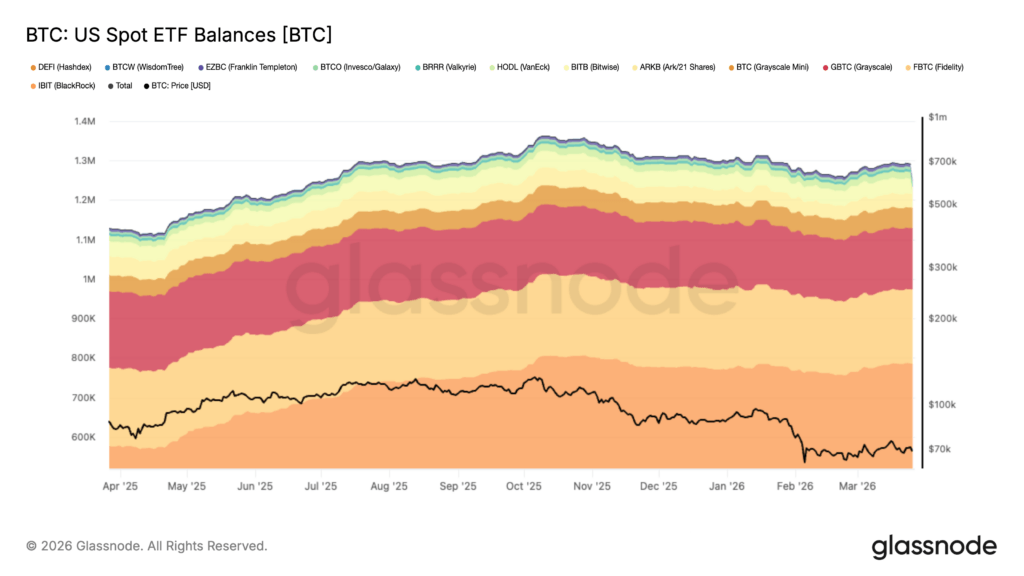
Despite experiencing such a deep drawdown, the US spot bitcoin ETF sector performed significantly better than anticipated. Eric Balchunas from Bloomberg noted in February that only about 6% of ETF assets exited during this downturn.
The introduction of spot bitcoin ETFs was initially seen as a pivotal moment for cryptocurrency; however, it seems we are now witnessing an even more substantial transformation as the market faces considerable challenges. A new group of Bitcoin holders has emerged who appear less inclined to sell at the first sign of trouble.
The SEC approved spot bitcoin exchange-traded products in January 2024 with trading commencing immediately after. This led to one of the largest product launches in ETF history.
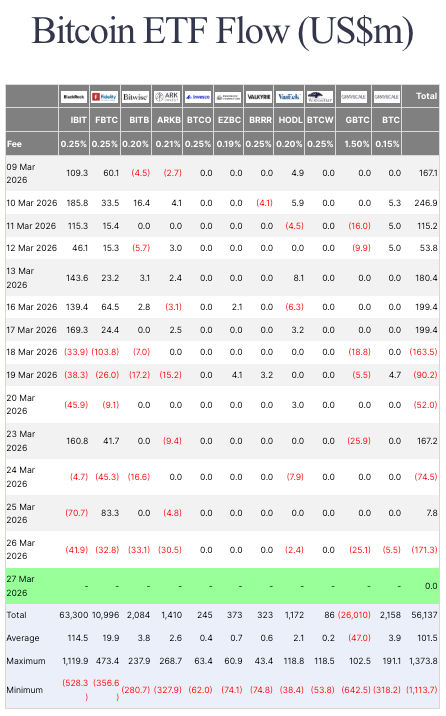
By March 27th data from Farside indicated approximately $56.1 billion had flowed into US spot Bitcoin ETFs since their inception. BlackRock’s IBIT alone accounted for roughly $63.3 billion while Fidelity’s FBTC attracted about $11 billion—contrasting sharply with Grayscale’s GBTC which saw losses nearing $26 billion.
This category has indeed witnessed some significant selling activity; however overall interest in ETFs remained robust despite these movements.
Thus when Bitcoin’s price plummeted, it did not drag down ETFs along with it.
The daily inflow trends remain unpredictable but align with general expectations. Farside reported net inflows totaling $167.2 million on March 23 followed by outflows amounting to $171.3 million on March 26th—indicating ongoing volatility influenced by current geopolitical tensions yet demonstrating relative resilience amidst turmoil where mass exits failed to materialize as many had feared previously
A New Era for Bitcoin Holders
The advent of ETF structures has transformed who can invest in Bitcoin and how they engage with it—shifting ownership away from exchanges or personal wallets towards institutional products embedded within familiar investment frameworks.
While these ETFs opened doors for institutions interested in acquiring Bitcoins—they also facilitated institutional trades entering into cryptocurrency markets themselves Initially dominated by major players seeking regulated exposure—the space quickly attracted participants eager to capitalize on liquidity dynamics inherent within volatile markets.
An analysis conducted by CF Benchmarks utilizing data from various hedge fund filings indicates much hedge fund engagement revolves around basis-style strategies rather than long-term commitment levels Additionally—it is worth noting SEC regulations stipulate that such filings arrive retrospectively thereby offering snapshots reflective only upon prior behaviors rather than real-time activities Nonetheless—they serve illustrative purposes regarding expanding investor demographics present today.
This distinction holds significance When stating Wall Street hardly reacted during periods where $BTC‘s valuation halved It does not imply zero sales occurred Instead—it highlights how resiliently positioned our existing ETF framework managed through adverse circumstances without triggering mass withdrawals once deemed inevitable previously
Diving deeper into individual funds reveals clearer insights IBIT stands tall among competitors while FBTC garners considerable support Meanwhile GBTC continues losing assets Observations show strong inflows directed toward leading funds alongside steady backing received across select others contrasted against persistent outflows experienced by older incumbents like GBTC .
A Different Kind Of Market Reaction
If one seeks parallels regarding impacts observed stemming primarily due fluctuations seen affecting prices tied directly towards gold could provide insight here In April2013—a notable decrease occurred concerning gold prices prompting extensive exits recorded amongst Gold-backed Exchange Traded Funds The World Gold Council reported outflows reaching350 tonnes representing12 .9 % depletion across holdings during said timeframe .
Your observation surrounding current state remains distinctly different despite greater severity exhibited throughout recent declines witnessed pertaining specifically towards BTC Yet remarkably no significant exodus transpired among larger holders still persists nonetheless amidst prevailing volatility
Taking note events occurring solely upon date marks namely march26 yielded massive net withdrawal totaling171 million dollars alongside continuous swings prompted driven largely through developments emerging out Iran region Nevertheless—the evolving responses exhibited amongst holders signify crucial transformations ushered forth via emergence associated specifically attributed toward establishment existing frameworks related ETPs/PFAs respectively ; thereby altering traditional perceptions established historically speaking concerning behaviors exhibited under duress situations faced previously encountered prior iterations throughout marketplace itself .
Possibilities exist suggesting two interpretations arise One viewpoint posits stronger hands entered marketplace resulting ultimately whereby investors began treating BTC similarly akin broader portfolio allocations Alternatively another interpretation suggests simply slower pace observed regarding potential sell-offs may lead macro shocks testing endurance levels later Both perspectives remain plausible given inconclusive nature prevailing surrounding dataset currently available thus far ..
Regardless what outcomes lie ahead — shifts observable indicate profound changes affecting ways individuals interact dynamically under stress scenarios faced henceforth moving forward A drastic40 % crash used invoke feelings akin full-blown bear-market panic However contemporary context rooted firmly grounded amid dominance exercised predominantly deriving influence derived via dominant presence exerted owing predominantly attributable performance achieved through ETP mechanisms underpinning operational structures established recently set forth revealing noteworthy distinctions arising influencing patterns prevalent amongst transactions executed going forward ultimately showcasing adaptive strategies employed shifting paradigms witnessed taking place right before eyes transforming landscape entirely reshaping narrative traditionally held views encompassing relationship held therein between respective parties involved henceforth marking definitive turning point witnessed along trajectory unfolding presently depicted effectively showcasing transformative journey undertaken shaping future endeavors realized transitioning landscape altogether providing clarity illustrating fundamental shifts evident today compared yesteryears allowing room optimism paving pathways growth opportunities emerge paving roads ahead signaling promising horizons await exploration yet uncharted territories beckoning venture forth!