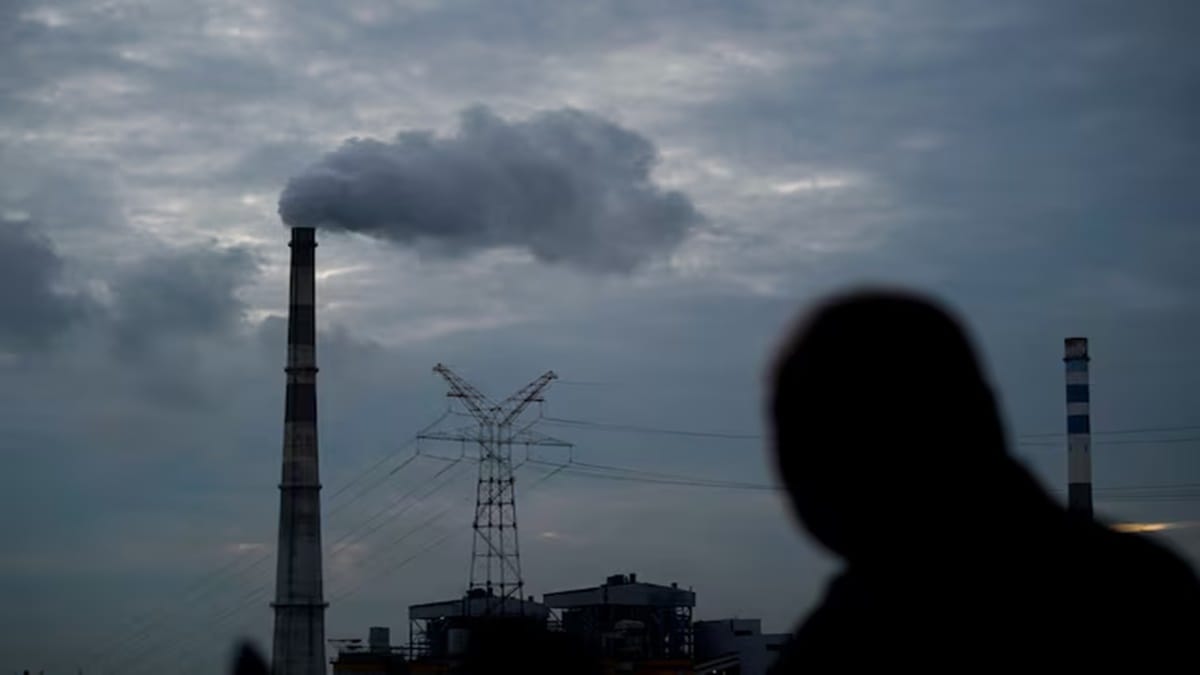
Sharpening its climate commitments amid rising global pressure and evolving energy transition dynamics, the Union Cabinet on Wednesday approved India’s updated Nationally Determined Contribution (NDC), setting a target to cut emissions intensity by 47% by 2035 from 2005 levels and increase the share of non-fossil fuel-based power capacity to 60%.
Announcing the decision, Union minister for information and broadcasting Ashwini Vaishnaw said India has already reduced emissions intensity by 36% between 2005 and 2020, and is now stepping up ambition under the Paris Agreement.
The updated NDC for 2031–2035, approved under the chairmanship of Prime Minister Narendra Modi, marks “a significant step towards strengthening India’s action… while reinforcing its commitment to sustainable development and climate justice,” the government said.
ALSO READCentre retains 4% inflation target till 2031
“Our emissions intensity has since reduced by 36% during 2005 to 2020, and the target has now been enhanced to 47% to be achieved by 2035,” the statement said.
Beating the Clock
India’s revised targets build on a track record of early achievement. The country had earlier committed to reducing emissions intensity by 33–35% by 2030 and achieving 40% non-fossil fuel capacity, both of which have already been met ahead of schedule.
The share of non-fossil fuel-based installed capacity has reached 52.57% as of February 2026, with the government now raising the ambition further to 60% by 2035.
The updated NDC is guided by the vision of “Viksit Bharat,” which, the government said, “is not just a goal for 2047, but a commitment to act today to build a prosperous, and climate resilient Bharat for the future generations.”
Green Hydrogen and Carbon Sinks
India has also enhanced its carbon sink target, aiming to create 3.5–4.0 billion tonne of CO2 equivalent through forest and tree cover by 2035, up from the 2.29 billion tonne already achieved by 2021.
“Afforestation and ecosystem restoration efforts continue to contribute towards India’s carbon sink targets while supporting rural livelihoods,” the statement said, adding that the country has been ranked third globally in net gain in forest area by the Food and Agriculture Organisation.
The government said India’s climate strategy is being implemented through “large-scale renewable energy expansion, battery storage systems, and green energy corridors, cleaner manufacturing,” alongside initiatives such as the Green Hydrogen Mission, PM Surya Ghar and PM-KUSUM.
The framework also places emphasis on adaptation, with the statement noting “strong emphasis on adaptation and disaster resilience,” including mangrove restoration, early warning systems and climate-resilient infrastructure.
ALSO READRising fuel costs, packaging shortage threatens milk supplies
India’s updated NDC comes nearly six months after the deadline for revised submissions under the Paris Agreement. The government said the targets have been shaped by stakeholder consultations and align with the principles of “Common but differentiated responsibilities and respective capabilities (CBDR-RC),” balancing development priorities with climate action.
The statement added that the updated commitments are expected to generate opportunities, with the green transition “likely to generate new opportunities for youth and women, making them key partners in green transition.”
However, experts flagged that the targets may not fully reflect the pace of transition. Vibhuti Garg, Director South Asia at the Institute for Energy Economics and Financial Analysis, said, “India’s revised NDCs are a step in the right direction, but they fall short of the ambition required at this stage of the energy transition.”
She added that with non-fossil capacity already above 52%, the target of 60% by 2035 “does not adequately reflect either the pace of progress or the scale of opportunity ahead.”
TOPICSClimate changeThis article was first uploaded on March twenty-six, twenty twenty-six, at thirteen minutes past one in the night.