A month ago, business at A Yousuff’s small leather processing unit in Ranipet moved to a familiar rhythm — steady orders, predictable shipments, and a workforce that knew what each day would bring. Today, that rhythm has been broken. Thousands of miles away, a war in West Asia is casting a long shadow, and Yousuff is left grappling with cancelled orders, delayed consignments and surging costs that have slashed his business by half.
“Our customers say they have no fresh export orders. They’ve stopped new orders and even paused existing ones. I don’t know how to run production or pay my workers,” said Yousuff, who runs Fine International, a 20-worker unit that processes semi-finished leather for footwear makers. His monthly turnover of about Rs 2 lakh has dropped sharply this month as the Israel–US–Iran conflict enters its third week.
ALSO READHormuz crisis fuels Russia oil surge into India
What is unfolding at Yousuff’s unit is being echoed across Tamil Nadu’s leather belt — from Ranipet and Vellore to Ambur and Vaniyambadi — a dense industrial cluster that powers a large share of India’s leather exports. Home to over 700 tanneries and hundreds of footwear units, the region is now beginning to feel the first real economic tremors of a conflict that shows little sign of easing.
Fraying Supply Chains
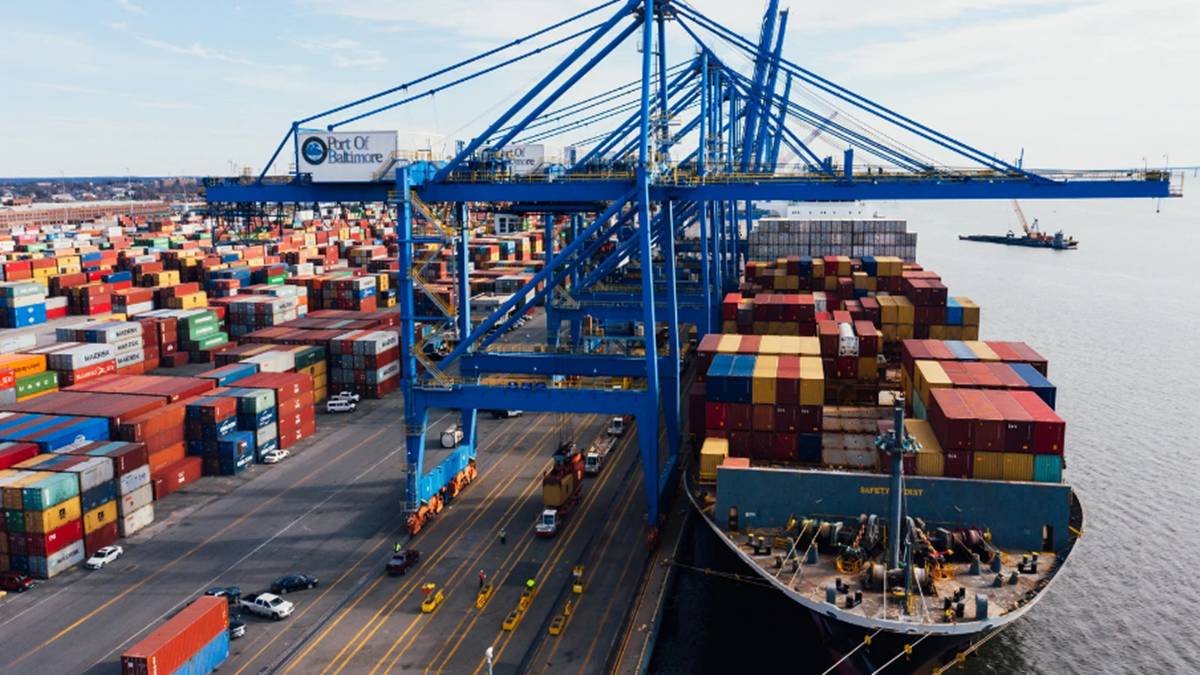
The strain is not just about disappearing orders. It is also about goods that can no longer move with ease. “Some of our containers are already stuck, while fresh consignments are taking two to three weeks to reach the US. Freight costs have jumped to $1,500–2,000 per container, making shipments unviable,” said SM Fayaz Ahmad, honorary general secretary of the Ambur Tannery Association.
As supply chains fray, input costs are rising sharply, squeezing margins that were already thin. In Vijayawada, L Swamy Venkat, who runs 1947 Inc, is seeing the pressure build from the ground up. “Raw material prices have gone up by 70% just in a month. Even if we are willing to pay, some materials are simply not available,” he said. His company produces over 1.5 million leather wallets and 500,000 belts annually for global brands including Timberland, Steve Madden and Clarks.
Industry executives describe the situation as a “triple whammy” — each blow reinforcing the other. “First, the cost of petroleum-based raw materials have gone up. Second is supply disruption, as many inputs are imported from Europe while outbound shipments are delayed. Third is currency depreciation, which makes these imports even costlier,” said Vikas Mahtani, regional chairman at the Council for Leather Exports.
The uncertainty is now rippling through supply chains in real time. “We’ve received emails from suppliers asking us not to place fresh orders until they reconfirm prices and delivery timelines,” Mahtani, who is also managing director of Mumbai-based KAVI Fashions, added.
ALSO READUrea units cut production by half amid LNG shortage
Crude Connection
At the heart of this disruption lies crude oil. Brent prices have surged to around $119 per barrel following strikes on oil and gas infrastructure in West Asia, up sharply from $70–72 before the conflict began on February 28. The spike is feeding directly into the cost of chemicals and solvents that are essential to leather processing.
Prices of solvents such as acetone and methyl ethyl ketone have risen 40–60%. “While resins account for 20% of the formulation, nearly 80% is made up of petroleum-based solvents, so the impact of rising crude oil prices is significant,” said SK Sabapathy, managing director of Saba Group, a supplier of speciality chemicals to the leather industry.
The ripple effects do not stop at tanneries. In footwear factories, the pressure is building just as quickly. Petrochemical derivatives — polyurethane, polyvinyl chloride, ethylene-vinyl acetate and styrene-butadiene-styrene — are widely used in soles, adhesives and uppers, and their prices are now firming up in tandem with crude.
Synthetic soles alone account for nearly 30% of a shoe’s cost, leaving manufacturers highly exposed to input inflation. “We expect raw material costs to rise 15–20% due to the spike in petroleum-based inputs,” said a senior executive at a Chennai-based footwear unit, adding that non-leather footwear could face an even sharper impact.
For an industry that had just begun to find its footing — buoyed by improving demand and new export opportunities — the timing could not be worse. “The Gulf was emerging as a key market, with around $200 million in sales,” said M Abdul Wahab, regional chairman (South) of the Council for Leather Exports. “Freight rates have risen by about $600 per container.
Earlier it was around $1,300 and now it is close to $2,000 per container,” he said.
India’s leather industry, with a turnover of $24.6 billion in 2024–25 — including $5.6 billion in exports — has been aiming to scale up to $50 billion by 2030. But as war-driven disruptions ripple through orders, costs and supply chains, that trajectory is beginning to look increasingly uncertain.
TOPICSLeatherThis article was first uploaded on March twenty-two, twenty twenty-six, at fifty-two minutes past seven in the evening.