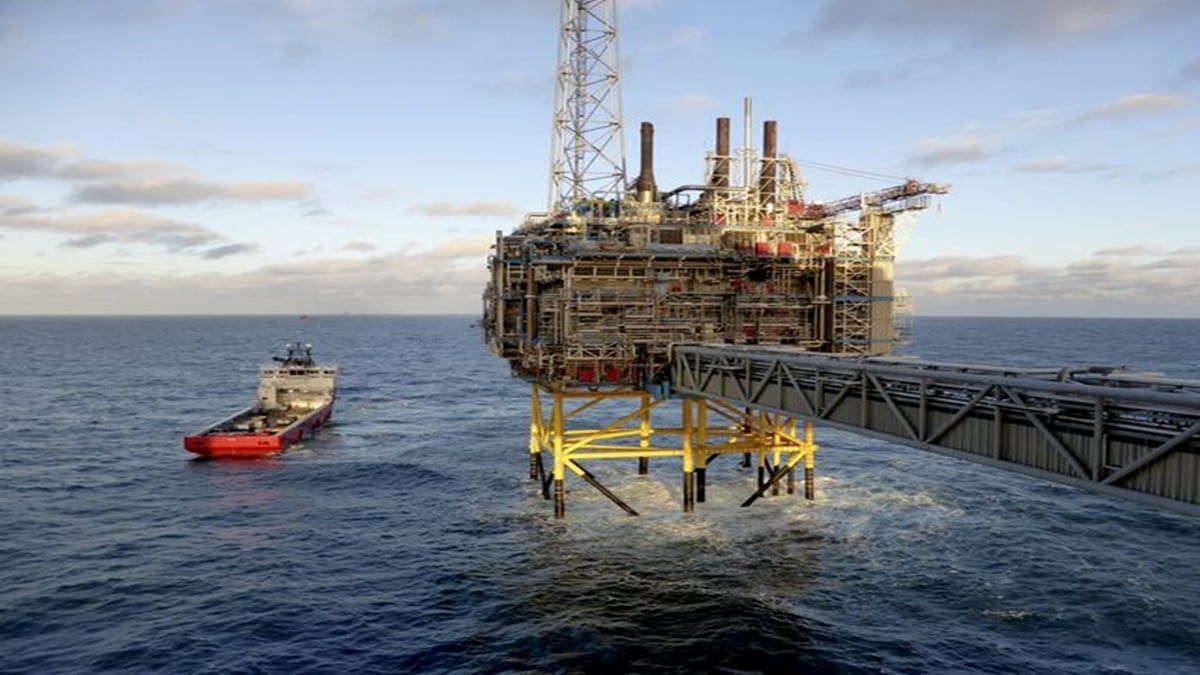
Missile strikes on Qatar’s Ras Laffan Industrial City — the world’s largest LNG export hub — have triggered a major supply shock, disrupting nearly 19% of global LNG output and raising immediate concerns for India, one of the largest buyers of Qatari gas.
The March 18 attack hit critical infrastructure including the Pearl GTL facility, with subsequent strikes damaging multiple LNG units and triggering fires, according to Wood Mackenzie. Production has remained halted since March 2, with force majeure declared from March 4, taking around 80 million tonne per annum (MTPA) of LNG out of global supply. The scale of disruption has forced a sharp reassessment of recovery timelines and market outlook.
ALSO READGovt enhances insurance for exports to West Asia
“Market expectations had been for a short disruption, with a controlled restart restoring supply to pre-conflict levels by mid-2026. That outlook now appears increasingly unlikely,” said Kristy Kramer, head of LNG strategy and market development at Wood Mackenzie. “A more prolonged outage would further tighten the global supply and keep prices elevated for longer.”
India’s Vulnerability
For India, the fallout is direct and significant. Qatar is the country’s largest LNG supplier, with long-term contracts covering 7.5 MTPA for Petronet LNG, 1 MTPA for GSPC, and additional volumes for GAIL. It also supplies about 5 million tonne of LPG annually. “If the facility is affected, it will impact us. The solution lies in diversifying our sources,” said Sujata Sharma, joint secretary, ministry of petroleum and natural gas.
She underscored the broader vulnerability to West Asia disruptions: “Anything which impacts the supplies from West Asia impacts us… We are trying to pick up the cargoes from other sources.”
Detailing the diversification strategy, she added: “In crude, we have already diversified. Around 70% of our crude is coming from the area outside the Strait of Hormuz… Some of our LPG is also coming from the US. Qatar is definitely a very big supplier of LNG. But there are other suppliers also, for example, US and Australia.”
ALSO READTankers with 1.7 MT of oil, LPG & LNG stuck in Gulf
For India, the immediate challenge will be managing supply gaps and price pressures, while accelerating diversification. The longer-term impact will depend on the extent of damage at Ras Laffan and the time required to restore operations. With Qatar supplying LNG worth $6.39 billion and LPG worth $3.21 billion to India in 2024-25, the attacks underline the country’s deep exposure to West Asian energy flows — and the urgency of reducing dependence in an increasingly volatile geopolitical environment.
The global LNG market has been losing approximately 1.5 million tonne of LNG supply each week since the war began, according to Wood Mackenzie, as production disruptions in Qatar and the United Arab Emirates (UAE) and ongoing disruptions in the Strait of Hormuz significantly constrain supply.
Structural Deficit
Wood Mackenzie said earlier projections of a quick restart are no longer tenable. Before the attacks, LNG output was expected to resume within days and ramp up over four to six weeks. However, damage across facilities is likely to extend outages significantly.
The impact on global supply could be structural. Qatar was producing around 6.7 MT per month, and a disruption lasting five to six months could push global LNG supply into a year-on-year decline, erasing expected growth.
“Even if supply were maintained at 2025 levels, the market would still face demand destruction in Asia, lower storage injections in Europe, and sustained upward pressure on gas and LNG prices,” said Daniel Toleman, Research Director, Global LNG, Wood Mackenzie. “Each additional month of disruption removes around 1.5% from annual global LNG availability.”
Asia — which accounts for nearly 90% of Qatari LNG cargoes is expected to bear the brunt, with India among the most exposed major buyers. Rising import costs and supply constraints could weigh on energy affordability and economic growth.
The disruption may also derail future supply expansion. Qatar’s North Field East project, expected to add 32 Mtpa, was already delayed to 2027 and now faces further uncertainty.
“Geopolitics continue shaping gas and LNG markets… the industry lacks flexibility to absorb major disruptions, creating market volatility,” Kramer said. “We expect buyers to prioritise LNG supply security with a renewed focus on diversity.”
TOPICSCNGEnergyLNGPetronet LNG LimitedThis article was first uploaded on March nineteen, twenty twenty-six, at fifty-nine minutes past ten in the night.