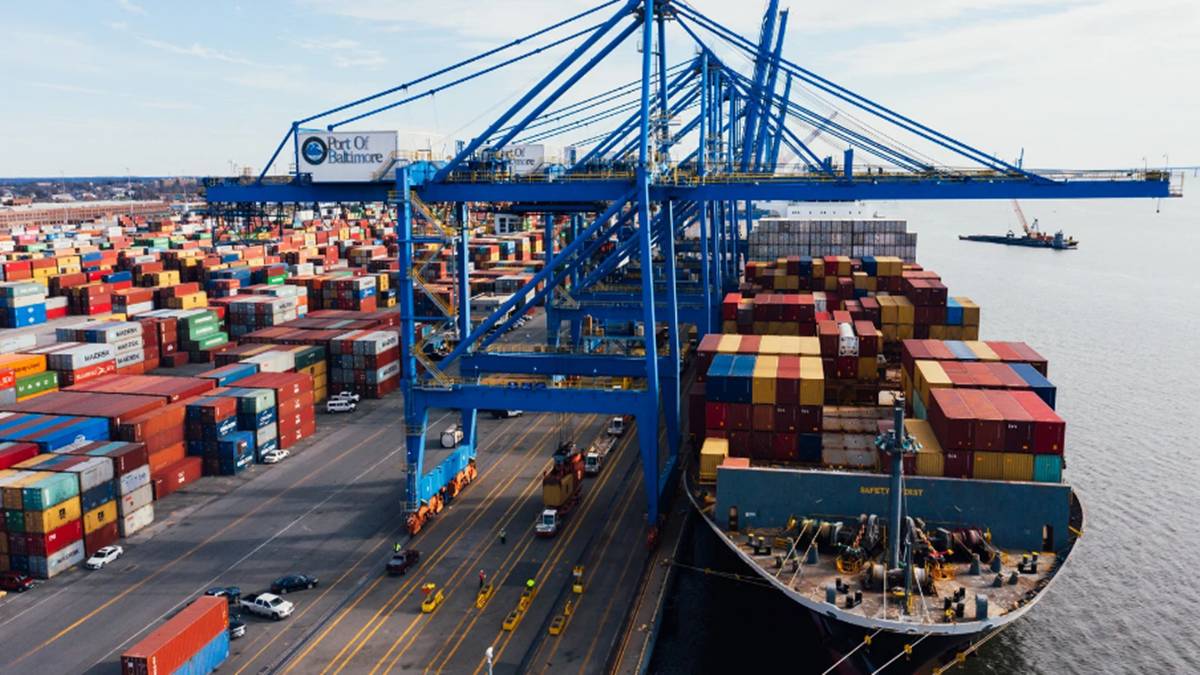
The conflict in West Asia has severely disrupted global shipping, reducing capacity on key routes to Europe and the US to 30-35% of normal levels, putting both exports and imports under pressure, according to industry officials.
Stranded ships and tankers in West Asia, coupled with the sudden rerouting of vessels from the Red Sea via the Cape of Good Hope, have thrown schedules into disarray, said Ajay Sahai, director general and CEO of the Federation of Indian Export Organisations (FIEO).
The disrupted schedules and extended journey times are expected to strain exports to Europe and North America, which together account for $195 billion of India’s projected $437 billion in goods exports in 2024–25.
Logistical Disarray
Reports indicate that over 400 tankers and 280 bulk carriers are currently stranded or idle in the Gulf region. The Cape of Good Hope has become the primary global detour, causing unscheduled arrivals at African ports such as Durban and Cape Town for refuelling.
ALSO READAttack on UAE oil hub; Indian tanker loads crude, leaves safely
Because of these disruptions, some exporters have recalled their goods, while others remain stuck at ports. To assist exporters, the government-run ports have waived ground handling charges, though private ports continue to collect fees.
Mitigation Measures
In West Asia, smaller ships are being deployed to carry goods to ports that are not directly affected by the conflict, Sahai said. These vessels are transporting containers from India’s west coast to Khorfakkan on the east coast of the United Arab Emirates (UAE), as well as to Aqaba in Jordan, Jeddah in Saudi Arabia, and Al Sokhna in Egypt.
While these smaller ships cannot handle the full cargo volumes carried by larger vessels, they are being used for urgent goods such as food and perishables, despite higher costs, Sahai noted. Unlike large carriers, these smaller ships end their journeys in West Asia and do not transport goods further west.
Although trade flows with the West are under pressure, Indian importers have not reported disruptions in supplies from China or other Southeast Asian countries.
ALSO READFertiliser supplies may turn tight by May
The Inter-Ministerial Group on supply chain resilience—established to manage trade disruptions arising from the conflict and which meets daily—was briefed on the latest challenges by exporters at a meeting on Friday.
In the West Asian market, ships stranded due to the conflict have either discharged cargo at ports deemed safer or are returning goods to India. Some exporters are working to redirect goods that left India but are stranded in the region to alternate buyers.
Shipping lines that had imposed a contingency surcharge for goods that reached ports before the conflict began on February 28 have started refunding the extra charges, Sahai said. Refunds are being issued as credit notes, which can be adjusted against future payments.
TOPICSexportsshippingThis article was first uploaded on March fifteen, twenty twenty-six, at twenty-seven minutes past eight in the night.