Is it a safe-haven asset?
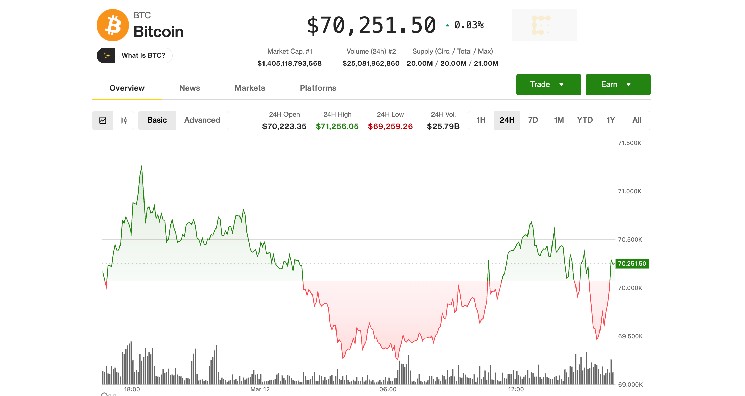
Currently, Bitcoin BTC$70,436.70 is maintaining its position just above the $70,000 mark despite significant sell-offs in other risk assets.
The decline in stock prices has been exacerbated by a surge in crude oil prices, which have risen over 10% and are approaching $100 per barrel due to concerns surrounding the Hormuz Strait—a vital shipping lane for oil transport.
“My greater concern lies with Iran rather than oil prices,” President Trump stated on Thursday. In his inaugural public address since assuming leadership as Iran’s supreme leader, Mojtaba Khamenei asserted that the Hormuz Strait should remain closed.
“It’s becoming increasingly evident that controlling the Strait is challenging and may require severe concessions to Iran or substantial military risks,” remarked Quinn Thompson, founder of Lekker Capital. “The situation is precarious; when pressure mounts, volatility tends to rise.”
As noon approaches on the East Coast, both Nasdaq and S&P 500 indices are nearing their session lows—down by 1.6% and 1.2%, respectively.
The ongoing concerns regarding a potential collapse in private credit have been overshadowed by developments related to Iran but remain critical nonetheless. Morgan Stanley (MS) recently joined an expanding list of financial institutions imposing redemption caps—this time at its $8 billion North Haven Private Income Fund. Consequently, shares of Morgan Stanley fell by 4% on Thursday leading declines within the financial sector; JPMorgan Chase & Co., Citigroup Inc., and Wells Fargo & Co also experienced declines close to 3% each.
In private equity markets, firms such as KKR, Apollo Global Management LLC., and Ares Management Corp saw their shares drop between 3% to 4% as well.
The price of gold decreased by about 0.6%, while yields on ten-year U.S Treasury bonds rose three basis points reaching a total of 4.23%.
The impact of oil on markets
According to James Butterfill from CoinShares’ research team, oil has emerged as a key influencer for cryptocurrency valuations now more than ever before. “The primary factor affecting global asset pricing isn’t labor market conditions anymore—it’s driven primarily by oil along with geopolitical crises,” he noted in his analysis report. He emphasized that even though recent U.S payroll data fell short of expectations—which typically would lead investors toward anticipating quicker rate cuts from the Federal Reserve—the response was muted this time around due largely because attention shifted towards escalating energy costs linked directly back into Middle Eastern conflicts instead.”
This past Thursday’s downturn notwithstanding,Bitcoin continues showing remarkable resilience amid heightened geopolitical tensions alongside broader market uncertainties holding steady near $70K levels while investors reassess global risks involved ahead moving forward.”
A possible explanation could lie within large-scale investors seeking more than mere exposure solely based upon Bitcoin pricing trends according Dom Harz co-founder at layer-2 blockchain BOB stating “Institutions desire beyond just basic access towards bitcoin itself—they’re increasingly pursuing infrastructure tailored specifically unlocking its full financial utility” pointing out rising interest observed surrounding bitcoin-backed applications enabling users’ capabilities spending saving earning utilizing network effectively .