
The recent increase in the consumer price index (CPI) aligns with forecasts, and analysts from 21Shares, a provider of exchange-traded products (ETPs), indicate that the effects of rising inflation have already been incorporated into the macroeconomic data for March’s CPI figures.
According to the February CPI report from the US Bureau of Labor Statistics (BLS), shelter costs rose by 0.2%, food prices increased by 0.4%, energy costs went up by 0.6%, and when excluding food and energy, all items saw a rise of 0.2%.
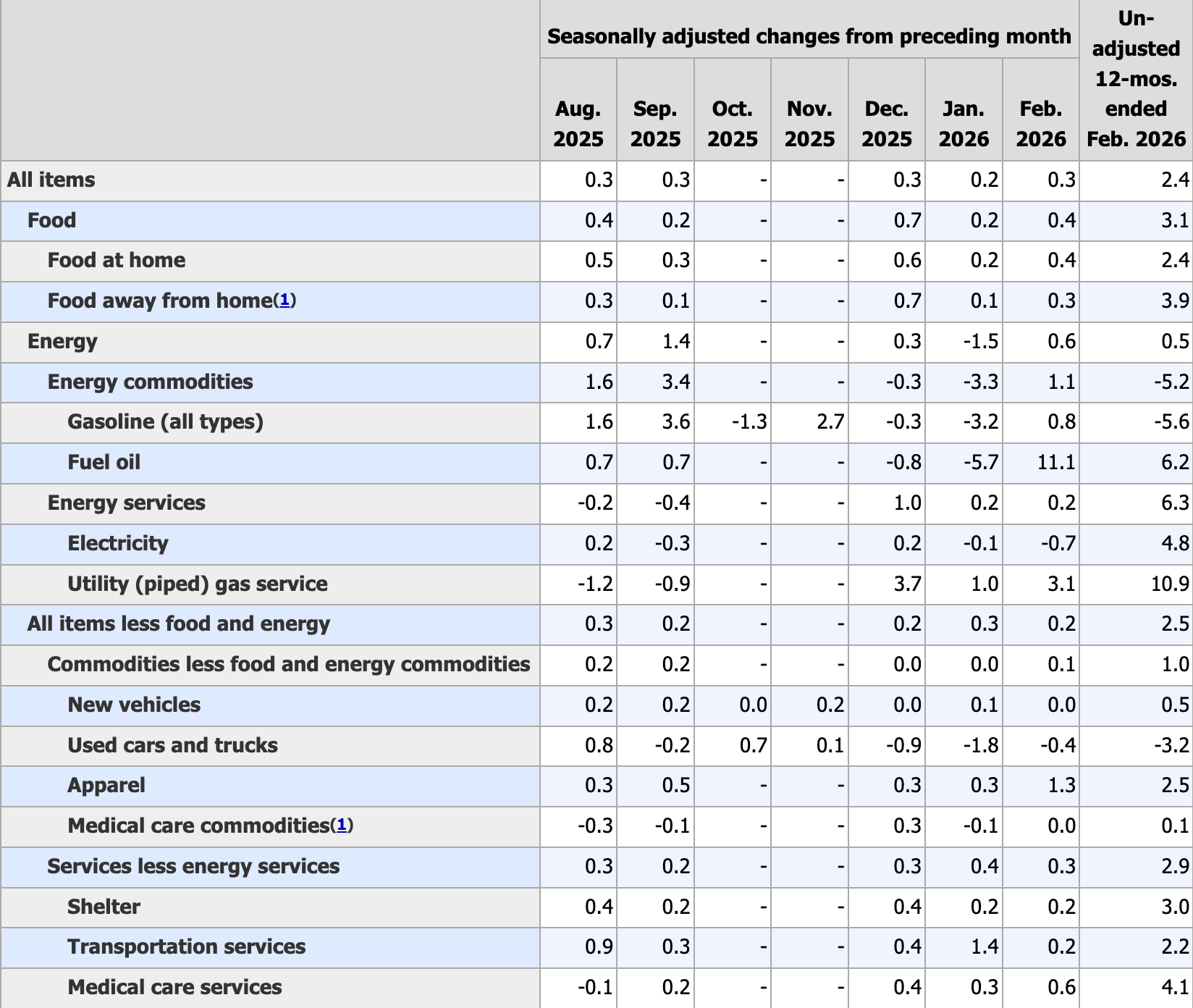
CPI inflation statistics across various economic sectors. Source: Bureau of Labor Statistics
Stephen Coltman, who leads macro analysis at 21Shares, noted that upcoming CPI reports will intensify scrutiny on the Federal Open Market Committee (FOMC), which sets interest rate policies. He remarked:
“The key issue now is how the Fed will respond to these anticipated higher CPI figures. Will they disregard this temporary spike despite past experiences with inflation? Or will they adopt a more hawkish stance as a precaution?”
The cryptocurrency markets have shown resilience following February’s CPI report; specifically, Total Crypto Market Cap—excluding Bitcoin ($BTC) and Ether (ETH)—has only seen about a 1% decline from its peak intraday value near $722 billion.
Related: Finance job openings hit a record low in thirteen years as US economy sheds 92K jobs
Implications for $BTC‘s valuation?
“In the short term, Bitcoin is expected to fluctuate within $68,000 to $74,000 range; however, an upward breakout beyond $75,000 seems likely,” stated Matt Mena from research at 21Shares.
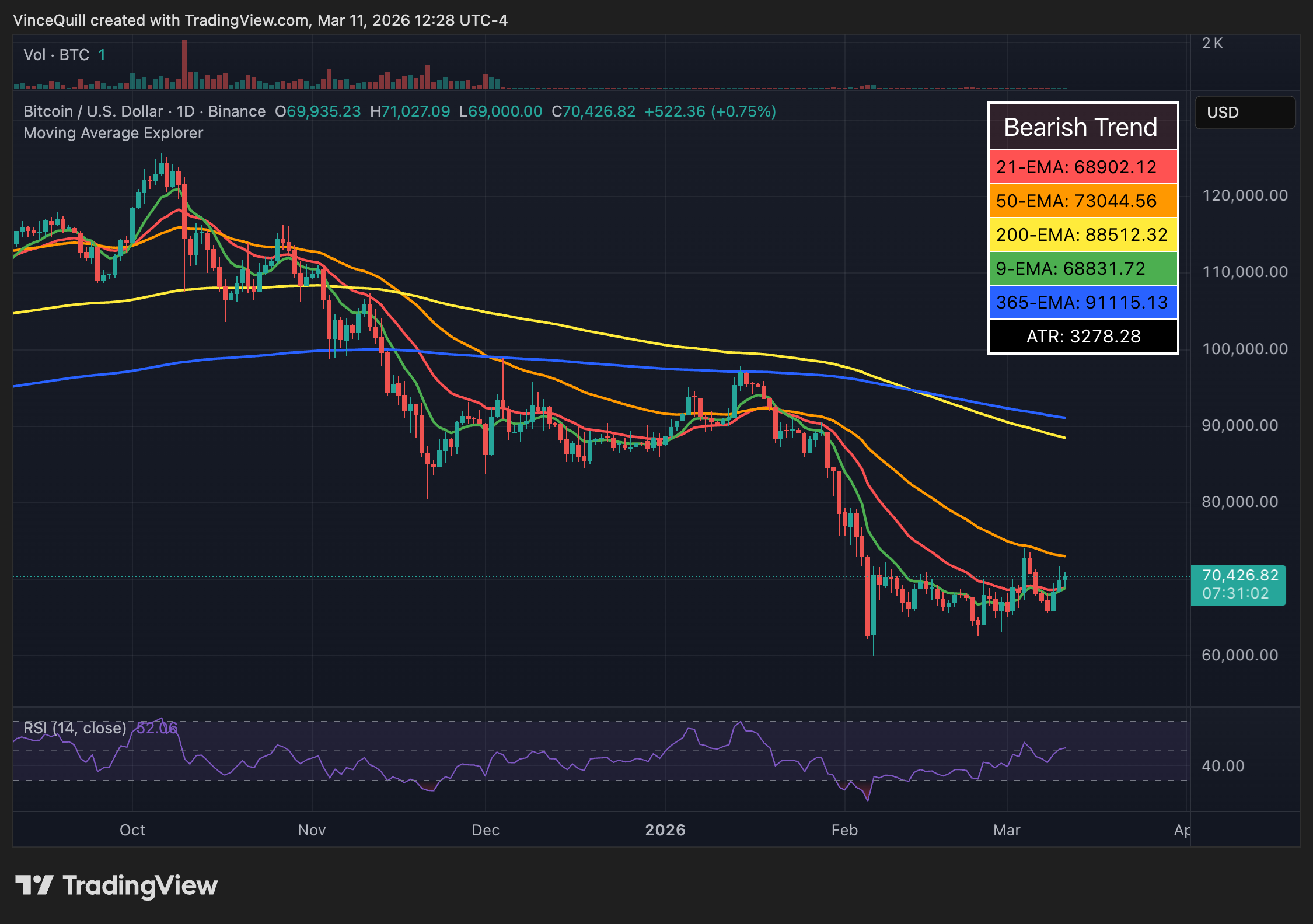
The value of $BTC has remained stable despite reactions to February’s CPI data. Source: TradingView
If $BTC breaks through $75K successfully it may enter into consolidation between $75K and $80K over time,” Mena added.
Past pricing trends indicate that after geopolitical disturbances in markets,$BTC‘s price often rebounds by over 15%, potentially bringing it back into the range between $77K and $80K,” he explained further.
A recovery towards these levels could be “fast-tracked” if FOMC decides to lower interest rates again in late-2026 according to Mena’s insights.
A mere fraction—only about 0.6%—of traders anticipate an interest rate reduction during March’s FOMC meeting where current rates stand between3 .50%-3 .75%. This information comes via CME FedWatch tool analysis.
This publication highlights:The ongoing discussion regarding Bitcoin’s four-year cycle concludes here: Benjamin Cowen shares his insights!