
Vitalik Buterin, one of the co-founders of Ethereum, has disclosed that the Ethereum Foundation utilized a streamlined version of distributed validator technology known as DVT-lite to stake 72,000 Ether back in February. He believes this innovation could significantly simplify the staking process for institutional investors.
“I aspire for this initiative to make distributed staking as straightforward and user-friendly as possible for institutions,” Buterin expressed on X earlier this week.
He elaborated that DVT-lite allows users to “select which machines operate their nodes and create a configuration file where all nodes share the same key. From there, everything is set up automatically.”
DVT-lite serves as an easier-to-deploy variant of distributed validator technology specifically designed for institutional or semi-professional Ethereum staking environments.
In traditional solo staking setups, operations are conducted on a single machine. This can lead to “slashing” penalties if that machine experiences crashes, hacks, or internet outages. In contrast, full DVT distributes secret keys across multiple computers that maintain constant communication—this method is highly secure but complex to implement.
The DVT-lite approach employs identical validator keys across several computers; thus if one computer fails, another can quickly take over with minimal downtime and very low risk of incurring penalties.
The Ethereum Foundation initiated its staking program using this technology in late February; currently, these assets are queued in line awaiting validation on March 19.
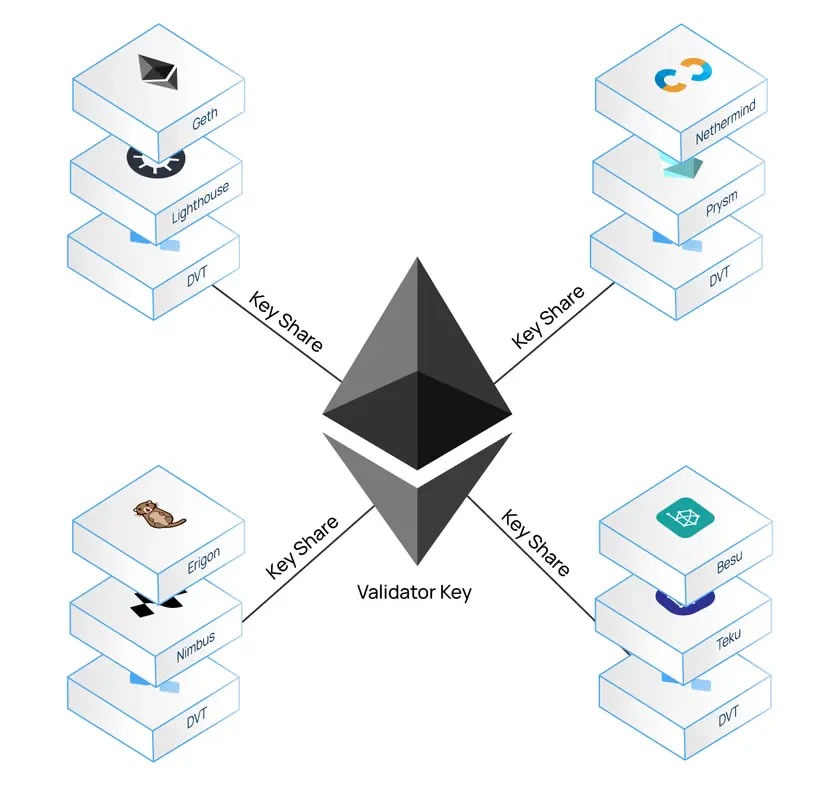
A basic illustration of a complete DVT setup. Source: Ethereum Foundation
Simplified Staking Solutions for Institutions
Buterin criticized the notion that managing infrastructure is an overly complicated task requiring professional expertise from every participant. He described it as “terrible and counterproductive to decentralization,” emphasizing the need for direct action against it.
He proposed creating tools like a “docker container” or “nix image” which would allow users to automate their staking processes with just one click or through command-line instructions per node.
Related: A.I.-driven coding might accelerate Ethereum’s development timeline: Vitalik Buterin
Buterin intends to adopt DVT-lite soon himself and hopes more institutions holding $ETH will embrace this method of staking.
“Our goal is to ensure control over staking nodes remains widely distributed; simplifying access is our first step.”
This past January he suggested integrating “native DVT,” enabling stakers to participate without being entirely dependent on any single node’s performance.
Sustained Interest in Staking Amid Market Challenges
<pDespite ongoing bearish trends affecting Ether ($ETH) prices, interest in ETH staking remains robust.
Currently there are approximately 3.2 million $ETH, with an estimated wait time of 55 days before entering validation queues while only about 29 thousand sit waiting exit approval with just a twelve-hour delay according ValidatorQueue data.
At present there are around 37.5 million $ETH staked—valued at roughly $76 billion based on current market rates (similar valuation range seen within companies like DoorDash or Motorola)—accounting for about thirty-one percent total supply.
Your magazine feature:China’s blockchain enhancements could yield ‘50x’ benefits while Alibaba-linked AI explores Bitcoin mining opportunities – Asia Express!