Over the past two years, spot Bitcoin ETFs have been viewed almost like a one-way gateway. They transformed Bitcoin from a complex asset requiring private keys and operational management into a simple ticker symbol accessible within any standard investment portfolio. This shift attracted capital inflows, led to the creation of new shares, and provided Bitcoin with a consistent and legitimate source of demand.
However, in the five consecutive weeks leading up to late February, investors withdrew nearly $3.8 billion from U.S.-listed spot Bitcoin ETFs — marking the longest streak of weekly outflows since early 2025. During this period, Bitcoin’s price hovered around the mid-$60,000 range before recently trading near $68,000 as markets sought equilibrium.
The magnitude of these outflows is significant on its own but even more critical is their timing. These withdrawals coincided with rising uncertainty over tariff policies that affected interest rates, equities, and commodities alike—causing increased volatility across financial markets.
Yet since February 20th, there has been at least a temporary change in this trend.
Between February 20th and 27th alone, U.S.-listed spot Bitcoin ETFs saw net inflows totaling approximately $875.5 million—including several days marked by strong share creations. While this doesn’t erase the previous five-week decline entirely, it complicates the overall narrative surrounding institutional demand for Bitcoin.
What initially appeared as an irreversible de-risking phase might actually be evolving into a market reset—with institutional interest cautiously reemerging despite ongoing macroeconomic uncertainties.
The Actual Impact of ETFs on Bitcoin’s Market
A spot ETF operates through mechanisms known as creation and redemption cycles. When investor appetite grows for ETF shares, authorized participants create new shares by contributing value to the fund; conversely when demand diminishes and shares are redeemed—the fund contracts accordingly. This system links stock market activity directly with underlying bitcoin exposure behind-the-scenes—making ETF flow data an important daily indicator for tracking bitcoin sentiment.
This connection became clearer after regulatory approvals allowed certain crypto exchange-traded products (ETPs) to perform “in-kind” creations/redemptions—meaning authorized participants can swap shares directly for underlying assets rather than converting everything through cash transactions—a move aimed at boosting efficiency while lowering costs according to SEC guidelines.
Even though many day-to-day operations still rely heavily on cash settlements today—the fundamental principle remains: ETF flows serve as one of the most transparent bridges connecting institutional investors with bitcoin markets worldwide.
A helpful way to conceptualize this:
- On inflow days: The ETF ecosystem expands via share creation which increases market exposure; effectively acting like an ever-present buyer that doesn’t require fresh news or hype each morning.
- On outflow days: Shares get redeemed causing contraction in exposure; removing that steady buyer from markets which then must absorb additional selling pressure elsewhere.
The Significance Behind Five Consecutive Weeks Versus A Single Rough Week
An isolated bad week can often be dismissed due to typical calendar effects such as portfolio rebalancing or short-term shifts in sentiment—but sustained declines lasting five weeks indicate something deeper about investor positioning beyond mere noise or temporary factors.
The cumulative withdrawal during those weeks reached roughly $3.8 billion—a record streak not seen since early 2025—and gains added weight given prevailing macroeconomic conditions affecting risk assets broadly across sectors.
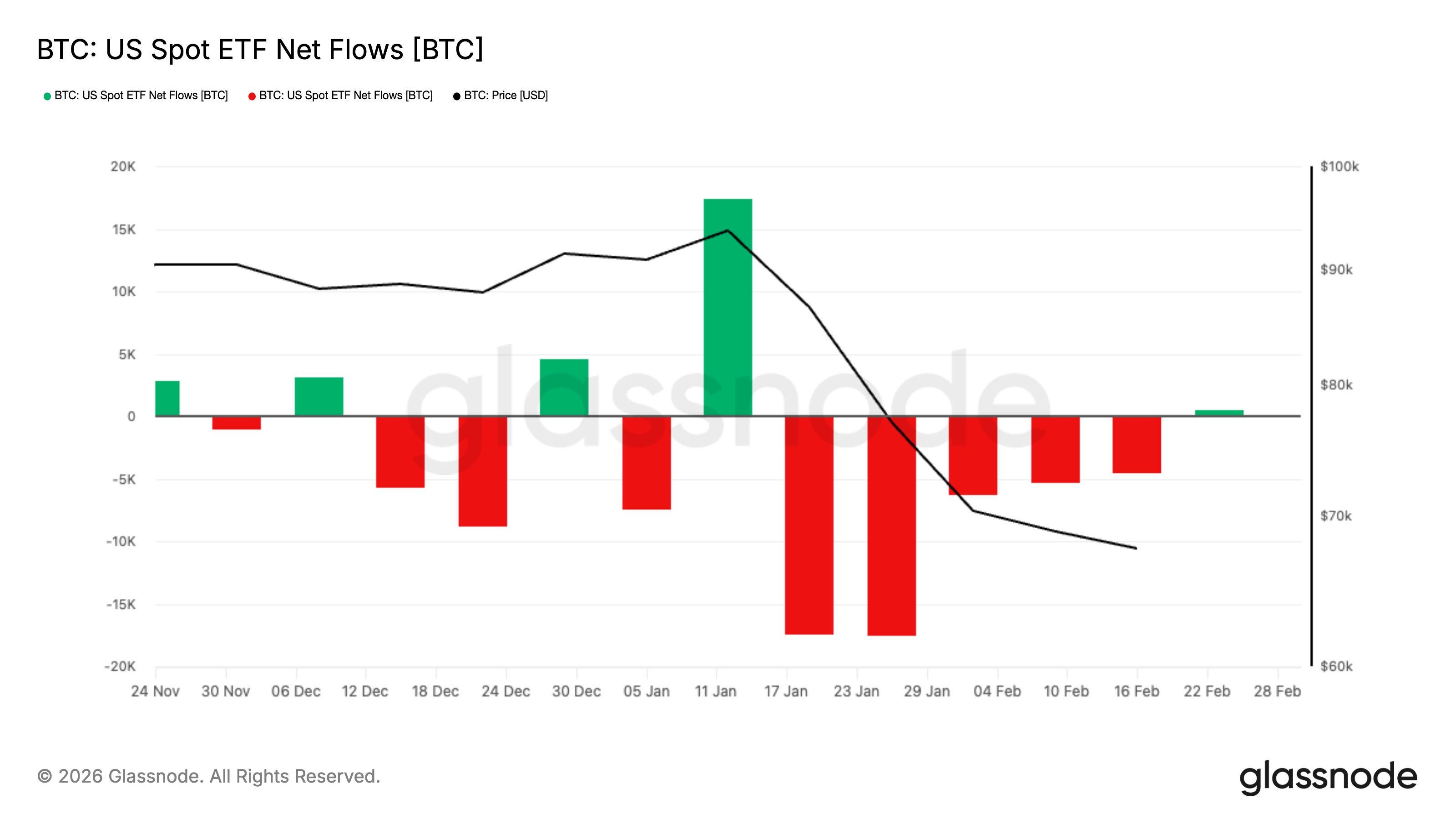
The resurgence of trade policy concerns has spilled over into cryptocurrency arenas too—with tariff uncertainties creating headline-driven environments where sudden repricing events ripple quickly between different asset classes.
Under such volatile circumstances managers tend toward stricter risk controls: cutting exposures rapidly triggers negative feedback loops resulting in further price drops accompanied by continued outflows.
Even if they later revisit those trimmed positions—it rarely calms down initial sell-offs promptly enough.
Liking it or not—Bitcoin currently resides among those “cut first” categories—and changes show earliest within ETF flow metrics reflecting institutional behavior patterns clearly visible here first-hand.
An often-made comparison during these periods involves gold—which typically attracts safe-haven buying amid tariff worries combined lately with dollar weakness plus geopolitical tensions intensifying demand further.
But contrastingly—even though gold benefits here—it does not imply failure on bitcoin’s part: instead what we observe is differentiation based upon asset characteristics whereby bitcoin behaves more akin to risk-on investments rather than protective havens during uncertain times..
If The Steady Flow From ETFs Pauses – What Steps In?
This question requires us setting aside grand narratives momentarily:
Who steps forward unconditionally when prices drop sharply—for example if bitcoin falls three percent within one session?
This year (2024), ETFs answered clearly—they provided default buying power without needing leverage plays memes viral hype just straightforward committee decisions implemented via brokerages consistently backing prices..
If that channel narrows however two outcomes become apparent:
- Dips become lonelier without persistent inflows cushioning declines; Spot buyers act selectively while liquidity providers charge higher premiums absorbing downside risks making recoveries slower even absent dramatic negative news;
- Selling pressure from redemptions carries tangible weight—not merely reflecting sentiment but actual mechanical shrinking positions institutionally;
Bearing consequences externally resembling less support available combined alongside greater supply driving weaker rebounds overall;
Tying together recent struggles highlights broader cooling trends among US institutions amplified partly due to prolonged ETF withdrawals alongside lighter holdings across regulated platforms generally present today;
While some may dispute framing tone—the data aligns well showing how crucial role flows play amidst heightened macro uncertainty remains undeniable..
Busting Myths About ETFs Acting As Price Floors
A true floor implies continuous committed buyers consistently adding positions—but seeing sustained exits spanning multiple weeks reveals conditional participation prone fluctuating strategies dependent upon external factors instead..
Cues To Monitor Moving Forward
- Earnings Flow Data Weekly: One positive week signals potential recovery pulse whereas multiple consecutive positive prints suggest reopening channels restoring steady allocations.
- Mood On Macro Down Days: if tariffs cause headline shocks triggering equity swings &rising volatility watch whether BTC holds firm behaving like scarce store-of-value versus moving purely correlated like risky beta.
- Btc Price Movements Without Flows: if prices rise despite flat/negative flows another class likely taking lead whether derivatives resetting positioning or renewed native crypto-spot demand signaling diversification beyond pureETF influence.&nbs p;
- Nature Of Outflows:&n bsp;a slow drip suggests measured trimming whereas sudden flush points toward forced liquidation heightening downward pressures significantly.
&nbs p;
No single indicator predicts exact pricing but collectively they reveal whether biggest sources fueling BTC bids remain active dormant reversing course impacting overall stability especially under jittery macro backdrops…
The Road Ahead: Three Possible Scenarios
The outlook no longer appears strictly bearish compared against last week’s perspective.
The prolonged $3 .8 billion withdrawal episode represented clear retrenchment amongst institutions yet post-February-20 tape introduced fresh dynamics including nearly $875 .5 million net inflow witnessed within seven days only…
This development neither negates prior unwind nor confirms broken pipes outright—instead suggesting stress tests applied temporarily disrupting flows rather than structural failures outright…
Three plausible paths emerge going forward:
- ( 2 ) Fragility : Temporary bounce followed swiftly by renewed withdrawals indicates tactical moves driven mostly by short-term traders reacting opportunistically—not strategic capital rebuilding.This scenario implies ongoing fragile rallies vulnerable especially given sensitive tariff environment encouraging rapid de-risking …
- (3) Stabilization Without Acceleration : Flows plateau near neutral levels easing extremes either side.Bitcoin enters consolidation phase quietly rebuilding positionings steadily.This sideways repair tends less dramatic yet constructive removing forced trades enabling normalized price discovery mechanisms …
</ul & gt ;
Main takeaway now lies here:&ldquo ;Market no longer faces unilateral draining trend via ETFS Instead testing if core institutional engines powering cleanest bids reactivate sustainably again .. ”
The eye-catching drawdown grabs headlines—but real focus shifts towards discerning marginal buyers’ return nature distinguishing early allocators expanding stakes versus opportunistic traders seeking perceived floors…
Flows won’t forecast exact pricing movements but remain vital barometers signaling expansion idling reversal status underpinning BTC’s most reliable bid source especially critical amid volatile uncertain global backdrop…
</paragraph > ; - (3) Stabilization Without Acceleration : Flows plateau near neutral levels easing extremes either side.Bitcoin enters consolidation phase quietly rebuilding positionings steadily.This sideways repair tends less dramatic yet constructive removing forced trades enabling normalized price discovery mechanisms …
<li style="margin-bottom:10px">(1) Confirmation:&/strong&q uot;if net inflows persist consecutively turning substantial again then earlier multiweek bleed reframes itself more accurately as repositioning event versus permanent exit scenario.Institutional channels regain footing allowing BTC better resilience amid macro headwinds while recent turbulence viewed simply as shakeout enhancing long-term health… </ li & gt ;