The United States’ Strategic Bitcoin Reserve faces the potential of losing almost 30% of its assets due to a single legal action, even if no coins are sold by the government.
Last year, an executive order signed by President Donald Trump established a Strategic Bitcoin Reserve. This directive instructed the Treasury Department to gather all government-held $BTC into a reserve account, assuring that these coins would not be sold.
However, the reported total for this reserve may exaggerate how much $BTC can genuinely be considered as permanent strategic holdings by the government.
According to estimates from Bitcoin Treasuries, approximately 328,372 $BTC is under US control. This positions it as the largest known state holder globally. With current bitcoin prices hovering around $65,842, this collection is valued at about $21.6 billion.
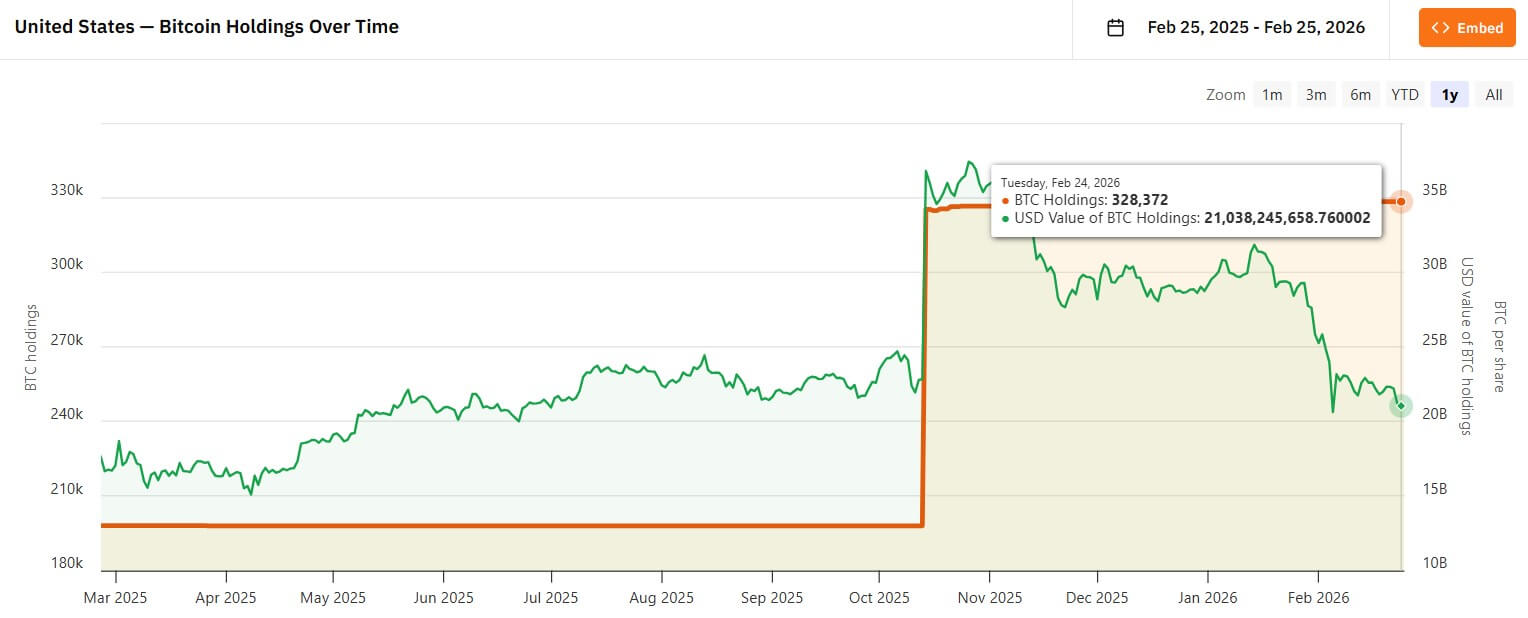
The situation becomes complicated when considering that a significant portion of these US holdings consists of $BTC, which isn’t entirely owned by the government in terms of strategic assets.
The executive order allows for disposals following court orders from competent jurisdictions and specifically mentions returning assets to identifiable victims of crime.
This exception is crucial because around 94,643 $BTC, roughly 30% of what the government holds, is linked to the Bitfinex hack that occurred in 2016.
If those bitcoins are returned as restitution to victims, it would reduce the reserve figure significantly down to about 234,000 $BTC.
The authenticity of reserve figures versus ownership issues remain unresolved
The Strategic Bitcoin Reserve is frequently discussed as though it represents a straightforward sovereign balance sheet; however in reality it’s more complex legally and financially.
A portion of this attributed $ BTC has been fully forfeited and clearly falls under US jurisdiction.
However some still remain entangled within criminal investigations or restitution claims which could take years before resolution occurs.
This discrepancy has become central in discussions surrounding reserves held by US authorities.
The Bitfinex-linked amount stands out distinctly among these cases; those bitcoins are accounted for within governmental custody and markets acknowledge their existence.
Yet if courts rule they should revert back towards victims then they were never truly partaking within any permanent strategic asset pool.
Both sides involved in public discourse often overlook critical nuances here;
the optimistic perspective overestimates resilience assuming every coin controlled remains strategically vital while pessimistic views amplify market consequences treating restitution actions akin with outright sales made sovereignly.
Understanding such legal distinctions plays an important role influencing price movements sentimentally affecting investor perceptions regarding what constitutes ‘Strategic’ reserves overall.
A closer look at why Bitfinex’s funds stay frozen
The theft associated with Bitfinex resulted in losing up-to119754$ BTC during August2016—marking oneof crypto history’s most significant breaches .
In February2022 ,US officials managedto recoverapproximately94643$ BTC relatedto saidhack—a seizure notableforits scaleand timing .
Restitution remainedan immediate concern thereafter ;inJanuary2025 , prosecutors petitioned federal courts seeking approvalto returnrecoveredassetsbacktoBitfinexasinkindrestitution—implyingthatthosecoinswouldbe returnedasBitcoinratherthanliquidatedfirstandconvertedintodollars .
This distinction bears significance regarding marketplace structure .
Governmental salesor auctions yield visible supply events where both timingandsizeare predetermined whereasan inkindreturn defers decisions downstreamtowardsrecipients themselves .
Potential recipients could include eitherBitFinEx or its former users depending on howcourtsresolve competingclaims .
US forfeiture proceduresaimedat prolongingthis stageallowthirdpartieswithinterestsinforfeitedpropertytopursue petitionswithinancillaryproceedings ;thishasemerged astheprimary battlegroundinBitFinEx case.
Some customers contendthatstolenassetsbelongedtothemindividually while conversely,BITFINEX arguesitultimatelyabsorbedlossesafter socializingthem later compensatingusers throughinternalmechanisms .
Thusoutcomesherecould have ramifications extendingwellbeyondthisindividualcase impactingfutureapproachesrestorationprocessesfollowingexchange hacks untilcourts settleclaimsorreachsettlements—thecoinsremain effectively immobilized duringthistimeframe
Consequently,reserves may appear stable on-chain but retain uncertaintieslegally speaking.
$ LEO acts likea proxy forthe court outcome
Legal proceedings continue slowly yet traders attempt pricing outcomesviaUNUSSED $ LEO (the exchange tokenusedbyBITFINEXANDIFINEX)
If BITFINEXreceives recovered,they planusing80%ofnetfunds repurchasingandburning$ LEO within18months
They indicated processesmay involveover-the-countertransactionslike direct-for-LIOswaps
Such policies essentially transformfederalcourtdecisionsinto massivebuybackpipelines,givingmarketsmechanismsto speculateontimelineslongbeforelegalresolutionsoccur
Given context,VetleLunde(K33Research)modelsLEOaroundtwo mainvalue drivers:ongoingbuybacks fundedbyBITFINEXtradingrevenues&expectedfutureburnassociatedwithrecovereddigitalcurrency
Usingbaselineestimationsaround95000 recoveredLunde positsallocationwouldamount75K tokensworthroughly$5B basedcurrentpriceswhile calculatingtrade-revenue buybacksalone yieldfairvalueapproximately125M dollars
Tradingthese catalystsremainshighlyvolatile.DatafromCoinMarketCapillustratesthat$ LEO’S MARKETCAPIS ABOUT8BILLIONWITH24-HOURTRADINGVOLUMEATJUST7.1MILLION.THATTHINLIQUIDITYPROFILECANSEVERELYMAGNIFYPRICEMOVEMENTS.MEANWHILE,HUGE MARKETCAPSHOWS TRADING AT60%PREMIUMTOIMPLIEDFAIRVALUE
Currentpremiummarks highest since elevatedpricingperiodfollowinginitialseizureannouncement2020.Lundepointsoutcurrentpremiumremainsnoisyduetoilliquidityconcentratedownershipmeaningfewparticipantscanheavilyskewmarkets
Thus tradersmayfront-runningcourttransferorleaninginmomentumwherefairvaluetakesabackseatUltimately,$ LEO ’s illiquiditywillamplifyfinaloutcome.Aconfirmedtransfercouldpushvaluationshighershort-termwhilemodestordelayeddistributioncompresspremiumsrapidly