The resignation of Marco Lavagna, the head of Argentina’s statistics institute, has put the inflation index in the public eye. The resignation comes after Milei’s government delayed the implementation of a new inflation index, which could alter the figures this year.
Argentina’s Statistics Chief Resigns Over New Inflation Index Delays
Argentina’s inflation miracle is in the spotlight, as a new method to calculate it might put Milei’s economic measures in a less favorable light.
The resignation of Marco Lavagna, head of the national statistics agency Indec, has put Argentina’s economic reports under public scrutiny, as the official left his post after Milei’s administration delayed the implementation of a new method to calculate inflation figures.
Exquanti, an Argentine consulting firm, stated that this equated to “data manipulation.” “Lavagna helped Milei and Caputo for two years by delaying the change, paying the price of discrediting both himself and the institute. He couldn’t keep doing so without risking his standing in the serious world of statistics,” it assessed.
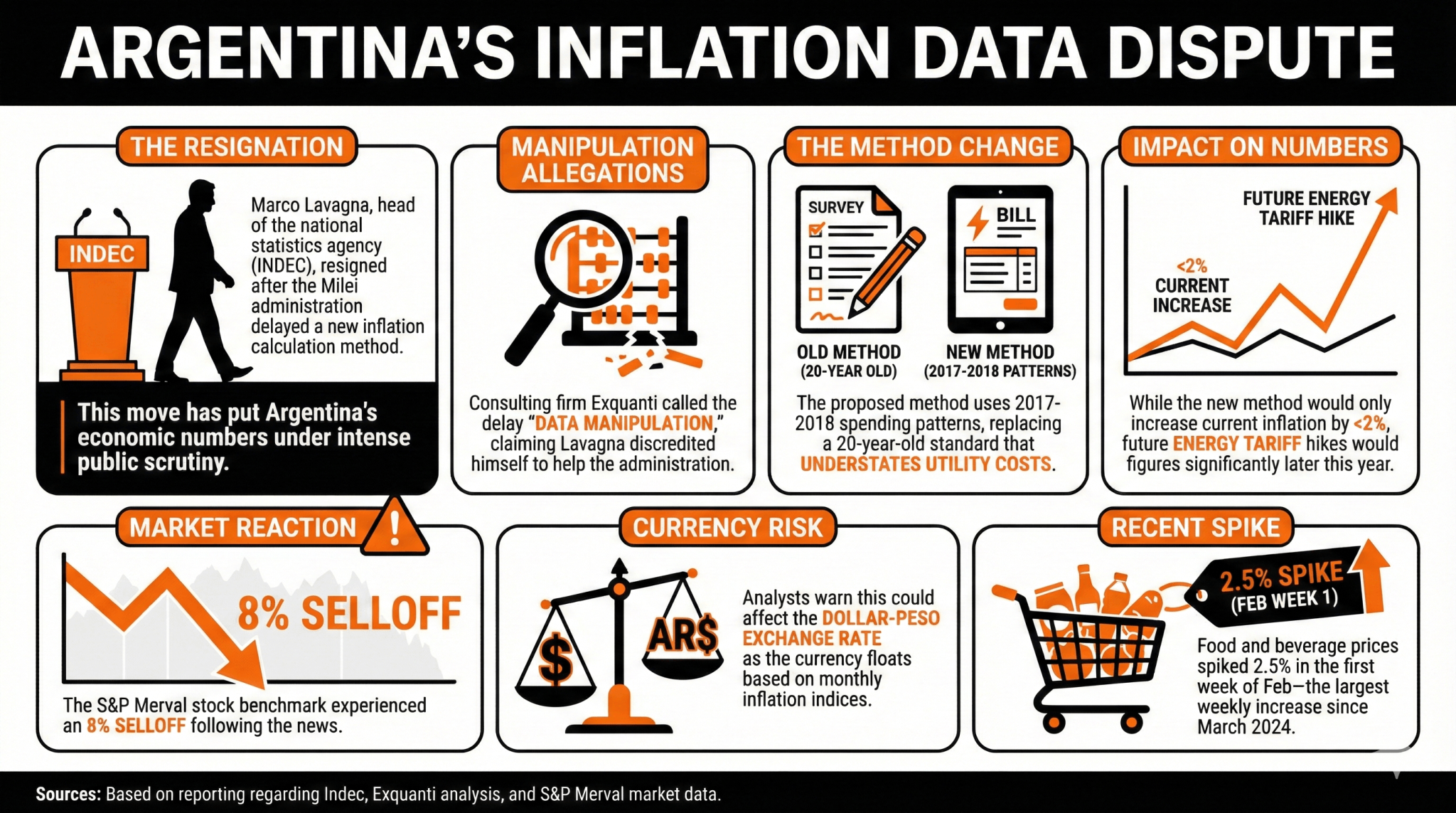
The new method, based on 2017-2018 spending patterns, would update the current standard that is based on 20-year-old surveys. Local economists state that this method understates current spending, with utilities having a larger relevance today.
Nonetheless, under the new calculation regime, inflation figures would only have increased by less than 2%, not enough to affect the work that Milei has done with its “chainsaw” formula. Even so, this new inflation index could affect these numbers going forward, as planned increases to energy tariffs would move inflation figures significantly later this year.
The effect of this resignation has already hit Argentine stocks, with the national S&P Merval stock benchmark experiencing an 8% selloff. Analysts state that this might also affect the dollar-peso exchange rate, as the currency is allowed to float as high or low as the monthly inflation index as it transitions to a free-floating system.
Reports indicate that food and beverage prices spiked 2.5% during the first week of February, the largest weekly increase since March 2024.
Read more: US Treasury Intervenes in Argentine Currency Market as Trump Ties Support to Milei’s Electoral Success
FAQ
What controversy surrounds Argentina’s inflation calculations?
The recent resignation of Marco Lavagna from Indec raises concerns about potential data manipulation in calculating the nation’s inflation.
How might the new inflation calculation method impact Milei’s economic policies?
The updated inflation method, reflecting recent spending patterns, could portray Milei’s measures less favorably, even if it shows only a slight increase in inflation.
What immediate effects has Lavagna’s resignation had on the market?
Following Lavagna’s departure, Argentine stocks experienced an 8% selloff, indicating investor uncertainty about economic stability.
How is inflation affecting prices in Argentina currently?
Reports indicate a significant spike in food and beverage prices, rising 2.5% in early February, marking the largest weekly increase since March 2024.