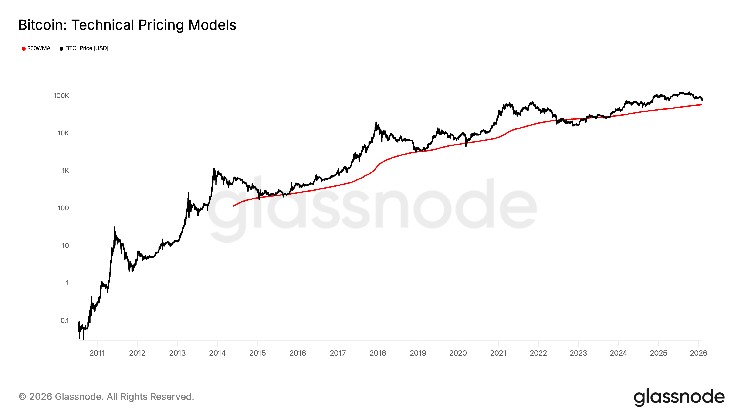
The recent decline of Bitcoin, with a notable drop of 11% last week, has raised significant concerns among investors. However, the more pressing issue may be the potential for prices to fall to around $58,000—approximately 25% lower than current values.
This latest downturn marks the largest weekly decrease since March 2025 and has left many holders anxious about a possible return to a prolonged bear market. Before any potential recovery can occur, there remains a challenging path ahead before reaching the crucial 200-week moving average (WMA), which is often seen as an indicator of long-term price momentum.
The WMA represents the average closing price of Bitcoin over the past two hundred weeks and serves as an essential benchmark in traditional four-year cycles for Bitcoin. Historically, this metric has indicated market bottoms in previous cycles and currently stands at $57,926.
Traditionally, Bitcoin tends to reach its peak during Q4 of its four-year cycle. This time around saw it soar to an all-time high of $126,000 in October but has since retraced nearly 40% from that peak value.
Further declines could be on the horizon.
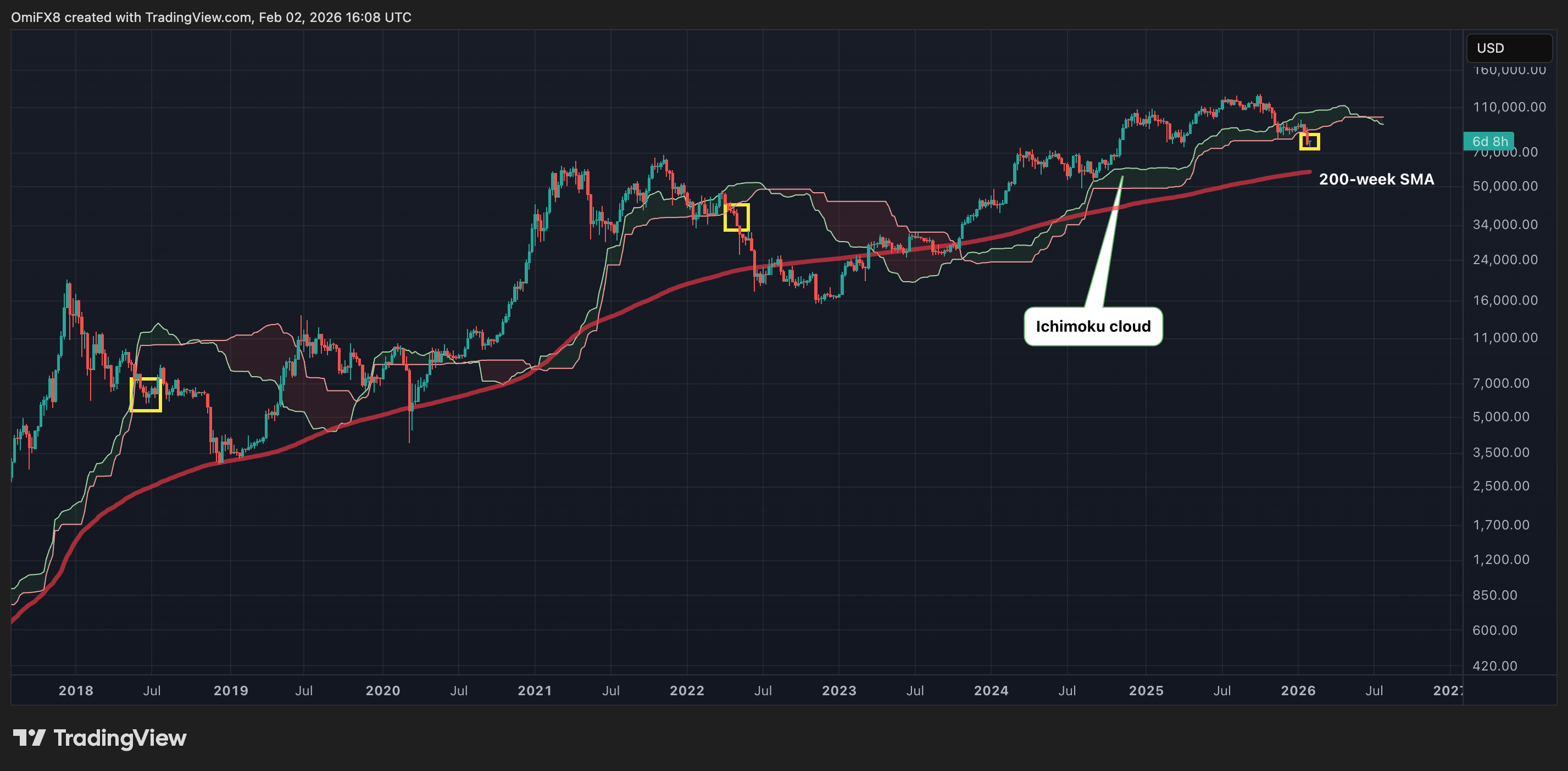
Last week’s downturn pushed Bitcoin below the Ichimoku Cloud—a technical analysis tool used for assessing momentum along with support and resistance levels. When prices are above this cloud formation, it signals strong bullish trends; conversely, falling below indicates weakness within the market akin to iron deficiency in humans.
The crossing beneath this cloud on weekly charts suggests a bearish trend shift that historically precedes some of the most severe bear markets experienced by cryptocurrencies.
 TradingView
This situation seems aligned with established theories surrounding four-year cycles influenced by halving events that reduce new supply by half approximately every four years—this phenomenon contributes significantly to cyclical bull and bear markets within cryptocurrency trading environments.
During previous bearish phases such as those seen in 2015 when prices hovered just above $200 or throughout late-2018 into early-2019 when they were slightly above $3,000—the WMA served effectively as support despite temporary breaches during significant market disruptions like those caused by COVID-19 back in March 2020.
In June 2022’s cycle low point where prices fell beneath $22k remained consistent until reclaiming their position relative again only after October’s close last year confirming once more its role as reliable long-term trend support line across various historical contexts associated with crypto valuations over time frames measured against these indicators mentioned previously
.While certainty cannot be guaranteed regarding future movements based solely upon these patterns alone; nonetheless recent developments suggest another extended period characterized predominantly through bearish sentiment might soon emerge yet still offers hope due largely thanks towards well-established levels acting positively upon price action dynamics overall moving forward!
UPDATE (Feb.2 ,16 :55 UTC): Rewrites headline