The US Senate has introduced a new version of the CLARITY Act that permits cryptocurrency firms to provide rewards based on user activity with stablecoins.
This legislative proposal, known as the Digital Asset Market Clarity Act, outlines that certain incentives tied to stablecoin usage would be allowed. Importantly, it clarifies that offering such rewards does not classify a stablecoin as either a security or a banking product.
Senate Banking Committee Chair Tim Scott, who unveiled the revised draft, emphasized in a statement shared with Cointelegraph: “Clear regulations benefit families and small businesses alike. This bill represents months of dedicated effort addressing various concerns from across the Committee and ensures everyday Americans receive necessary protections and certainty.”
The debate over stablecoin reward programs has become highly contentious between crypto companies and traditional banking institutions. Banks argue that yield-generating stablecoin products resemble deposit-taking or unregulated investment schemes. Conversely, crypto advocates maintain these initiatives function similarly to loyalty points or payment incentives commonly found in fintech services.
Exemptions for Payments, Loyalty Programs, and Staking Rewards
The draft legislation specifies that prohibitions will not apply to incentives linked with routine financial activities such as payments, transfers, remittances, and settlements. Additionally included are benefits related to wallets, accounts platforms or blockchain networks usage. Loyalty schemes, promotional offers subscription-based perks along with rebates connected to stablecoin utilization also fall under this exemption.
Related: Banks’ concerns about stablecoins deemed “unfounded myths” by academic expert
The exemption further extends into native cryptocurrency operations; according to the document rewards earned through liquidity provision collateral staking governance participation validation or broader ecosystem engagement would be permitted activities.
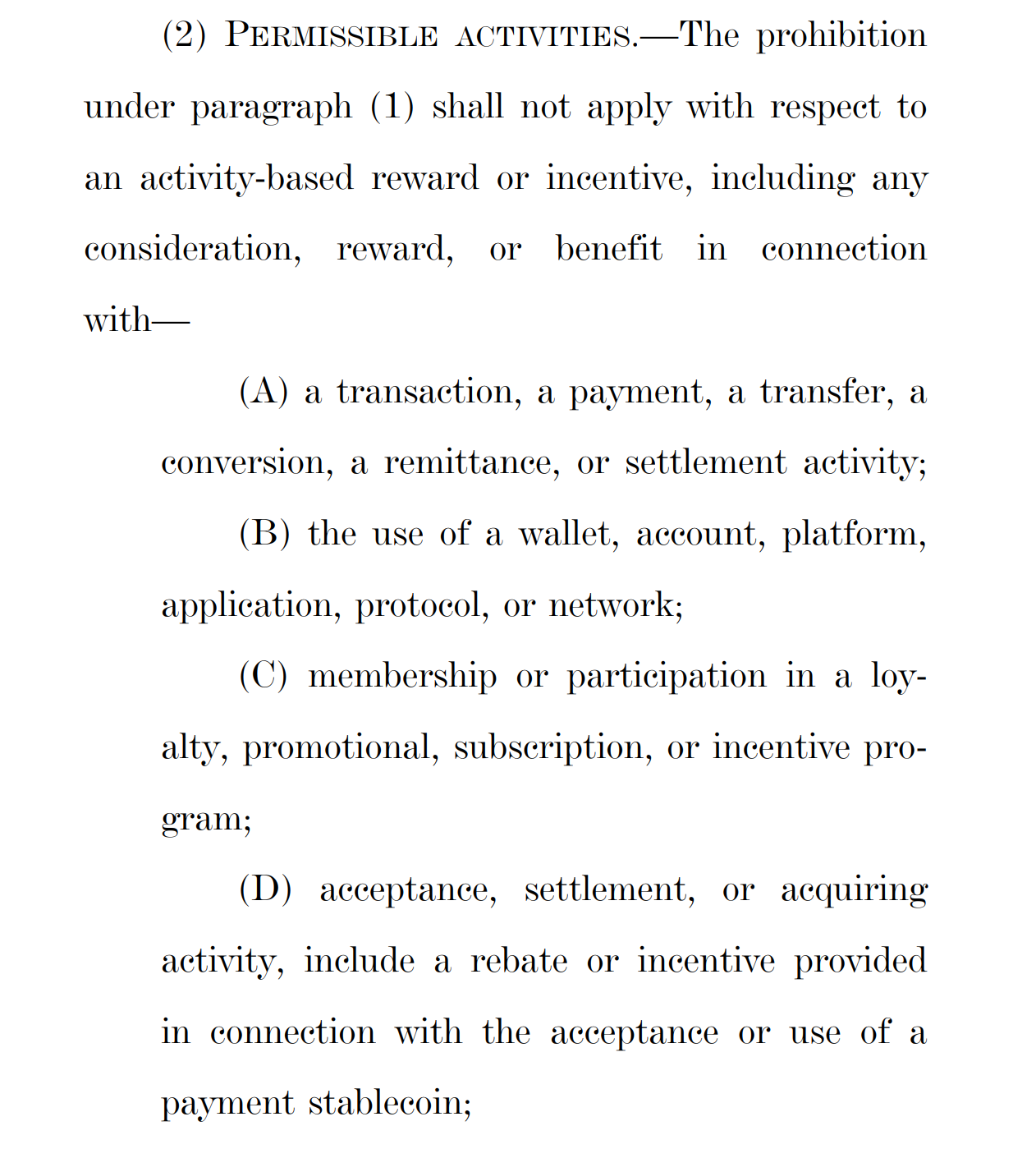
Permissible activities outlined in draft legislation. Source: Senate
The bill explicitly states digital asset service providers “mays not distribute any form of interest or yield (whether paid in cash tokens or other forms) solely for holding payment stablecoins.”
The US Senate Agriculture Committee postponed its markup session on crypto market structure legislation until late January citing Chairman John Boozman’s request for additional time needed to build broad bipartisan consensus.
Related: Charles Hoskinson expresses skepticism over CLARITY Act timeline suggests Trump’s crypto czar should resign
Community Banks Call on Congress To Address Stablecoin Yield “Loophole”
A coalition of US community banks recently petitioned Congress requesting amendments be made to the GENIUS Act amid claims that some stablecoin issuers exploit loopholes allowing yields indirectly passed onto token holders via exchanges and partners.
This group warned such reward programs offered by cryptocurrency exchanges could divert billions away from community banks thereby undermining their capacity to provide loans supporting small businesses farmers students homebuyers alike.
Countersigned last month by prominent advocacy organizations including The Crypto Council for Innovation along with The Blockchain Association these groups rebutted bankers’ assertions arguing “payment-related stablecoins do not serve loan funding purposes”. They cautioned proposed changes risk stifling innovation while limiting consumer options within this emerging sector.
Magazine feature: An overview of how cryptocurrency regulations evolved throughout 2025—and projections for 2026 changes